


- Linx was recognized in two separate 2026 Gartner reports: the Hype Cycle for Digital Identity and Infuse Agentic AI to Enhance Your IGA, signaling that agentic identity is becoming an established analyst category, not just a Linx talking point.
- The core argument: identity management is shifting from static, policy-based IAM ("does this policy allow this access?") to autonomous, context-driven access control ("what does this person or agent actually need right now?")
- As organizations deploy more AI agents, those agents need authentication, permissions, and governance at machine speed, something traditional human-only IAM wasn't built to handle.
- Manual access reviews don't scale with agent volume. The piece argues the fix is autonomous agents making access decisions, not more dashboards for humans to review.
- Linx's positioning: agentic capabilities work best built natively into the platform rather than bolted on, so agents can learn organizational context like peer groups, project scope, and exception patterns.
- Three self-assessment questions for readers: are your access decisions keeping pace with how work has changed, is your team drowning in review cycles, and would faster decisions reduce your attack surface.
Linx was recently recognized in two separate Gartner® reports: the Hype Cycle™ for Digital Identity, 2026 (July, 2026) and Infuse Agentic AI to Enhance Your IGA (June, 2026). Here's what excites me more than the mention itself: what it validates about where the market is heading, and what it means for the future of security as we see it.
Today’s Identity Problem
For years, identity access management felt static. You'd implement your IAM platform, set up policies, and then spend the next five years asking humans to review, approve, and audit access decisions. It was reactive. It was slow. And it was broken for the speed at which modern work actually happens.
Then AI agents changed the game.
Not in the "replace your identity team" way people feared. And not as a bolt-on feature to legacy IAM either. But as something fundamentally different: autonomous agents that understand your organization's context and make intelligent access decisions - for humans and other agents.
Think of it this way: traditional IAM asks "does this policy allow this access?" Agentic access control asks "what does this entity, person or agent, actually need, given their role, project, peer group, and what they're trying to accomplish right now?"
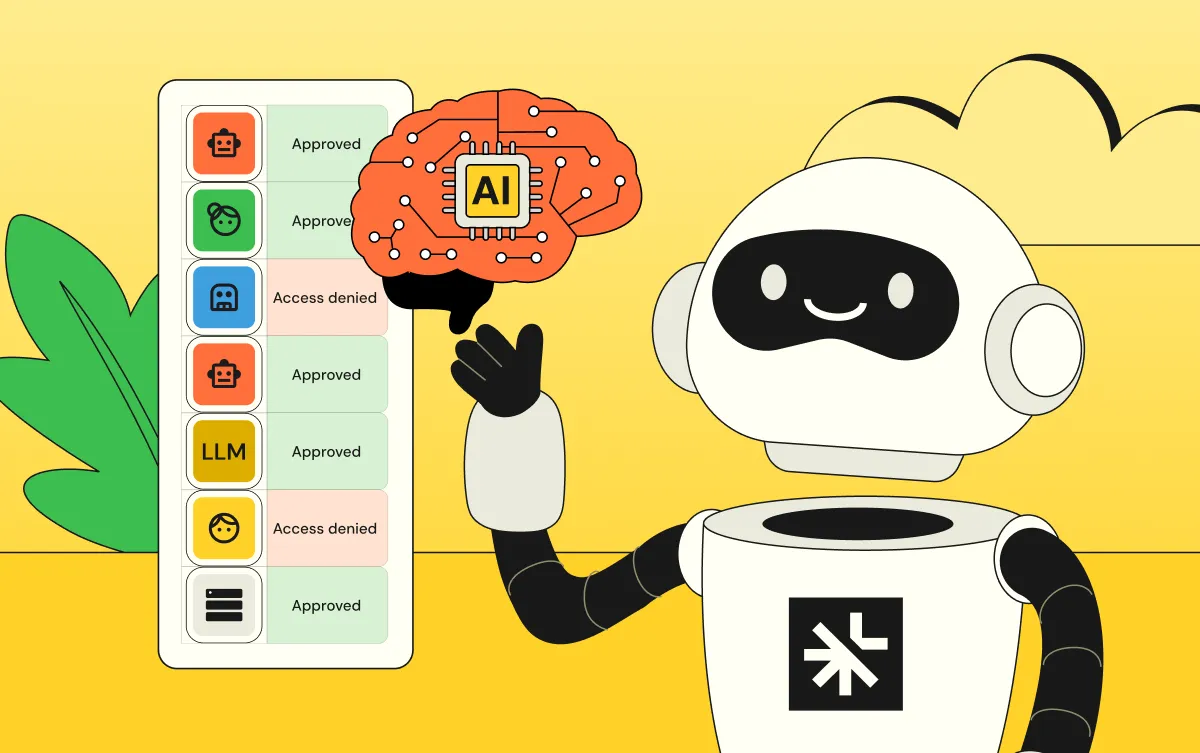
But here's the problem today: as your organization deploys more AI agents (for customer service, automation, data processing, orchestration), those agents need access too. They need to authenticate. They need permissions. They need governance. And they need it at machine speed, not human speed.
The organizations building for 2027 aren't just managing access for people. They're managing access for agents - and that requires a completely different architecture than traditional identity management was designed for.
That shift from policy-driven to context-driven, from reactive to autonomous, from human-only to human-and-agent access control - that's what's reshaping how leading organizations think about access.
What the Industry Is Seeing
Recent industry recognition acknowledges something we've been building toward: a new category of platforms that combine modern IGA capabilities with autonomous AI agents. The distinction matters: these aren't identity platforms with a chatbot feature. They're platforms where agents actively make contextual decisions about access, learn from your organization, and operate with minimal human intervention.
Linx is one of the few platforms architected this way from the ground up. We don't layer AI on top of identity policy. We've built identity and autonomous agents together - where agents are core to how the platform works, not an afterthought. That’s what it means to be AI-native.
Our customers have been telling us this for over a year: they want autonomous agents making smarter access decisions in real time, at scale, without creating review bottlenecks. They want agents that learn their organization's culture and dynamics, not AI that requires constant human hand-holding.
We believe that when Gartner identified agentic access control as the future - separate from traditional IGA - it validated what we've been hearing from customers in the trenches and what we've been building.
Beyond the Recognition: The Autonomous Shift
Look, we're proud of the recognition - genuinely. But the real story isn't about Linx being named. It's about your organization transforming how it approaches access control through autonomous agents.
This is bigger than identity access management. It's about reimagining what access control means when you have agents that can reason about context, learn organizational patterns, and make decisions autonomously.
The organizations at the forefront, and the ones recognized by Gartner, are the ones that have already figured this out:
- Access decisions should be autonomous and contextual, not manual and policy-only. A contractor in a specific department for a specific project should have different access than a full-time engineer - determined instantly by agents that understand the nuance. And those decisions should adapt in real time as roles and projects change.
- At scale, humans can't review every access request. Not because your security team isn't competent - they're brilliant - but because your organization isn't getting smaller. Your blast radius is getting bigger. You need autonomous agents that scale, not humans reviewing dashboards.
- Your platform needs to govern access for both humans and agents. This is the part most traditional identity vendors aren't thinking about yet. As you deploy LLM-powered tools, orchestration agents, automation systems, and autonomous workflows, those systems need secure access to your data and services. They need to authenticate at machine speed. They need permissions and governance. They need to be audited. A platform built only for human access is already obsolete.
- Agents work best when they're built into the platform, not grafted on. Off-the-shelf rules and bolted-on AI don't account for your company's culture, structure, or how work actually flows. When agents are native to your access control platform, they learn your organization's DNA. They understand peer groups, project contexts, exception patterns, and the difference between human and machine access requirements. They become smarter over time.
- The future isn't IGA with a copilot. It's AI access control that includes identity. We're seeing a fundamental shift from "identity platforms managing policies" to "autonomous agents making intelligent access decisions for humans and other agents, using identity as one input among many."
Our customers - from healthcare to fintech to large enterprises - are already running on this principle. They're not asking us to add more features to identity management. They're asking us to let autonomous agents handle access control for both humans and machines while their teams focus on strategy, exceptions, and governance oversight.
And the smartest ones are thinking ahead: "What happens when we have 50 LLM agents running in production? How do we grant them access securely? How do we audit what they're doing? How do we revoke permissions when a project ends?" Those are the conversations that separate platform builders from identity vendors.
What This Means for Your Team
If you're running identity access today, ask yourself three questions:
- Are your access decisions keeping pace with how work has changed? Most aren't. Work is distributed, temporary, and contextual in ways IAM was never designed for.
- Is your team drowning in review cycles? If you need hours to resolve access requests, you've found your bottleneck.
- Would smarter, faster access decisions reduce your risk? (Spoiler: yes. Faster legitimate access + better access hygiene = smaller attack surface.)
In our opinion, Gartner's research isn't predicting the future anymore - it's documenting what forward-thinking organizations are already doing.
The Real Opportunity
Here's what I tell our team every day: the win isn't being first. It's being useful.
We built agentic AI into the fabric of Linx from the start because it’s what our customers needed. We made our agents contextual because policy-only doesn't solve the real problem. And we made them native because grafting AI onto legacy systems creates more complexity, not less.
But we're not the only ones moving this direction - and that's a good thing. The more platforms that embed intelligent, context-aware access decisions, the faster the industry shifts away from "review every request" and toward "empower teams with intelligence."
What Comes Next
For us: we're doubling down on what customers are telling us works: autonomous agents that understand organizational context, intelligent access decisions at scale for humans and other agents, and continuous improvement through learning. Not as an add-on to identity. As the core of how access control works in an AI-native world.
For you: if you haven't started thinking about agentic access control, now's the time. Not because Gartner said so, but because your organization's work has already moved beyond what traditional identity management was designed for. You're deploying AI agents. You're building autonomous workflows. You're connecting systems at machine speed. Your access control system needs to keep up.
The question isn't "how do we automate identity policies?" It's "how do we let autonomous agents make access decisions intelligently for both humans and machines, using identity as one input, while our teams focus on strategy, exceptions, and security oversight?"
We're here to help if you want to talk about what agentic access control looks like in practice - not as IGA with AI tacked on, but as a fundamentally different platform built for a world where both humans and agents need secure, intelligent, auditable access. Or if you want to hear directly from customers who've already made the shift - they're managing access for their AI systems today, and those stories show you what becomes possible when you move from identity-first to agent-first thinking.
P.S. If you have a Gartner subscription and want to dig into the full research on where identity is heading, check out the Gartner Hype Cycle for Digital Identity, 2026 and the Gartner report titled Infuse Agentic AI to Enhance Your IGA. And if you want to hear from customers doing this today - how they've accelerated access decisions while improving security - let's talk.
GARTNER and HYPE CYCLE are trademarks of Gartner, Inc. and/or its affiliates. Gartner does not endorse any company, vendor, product or service depicted in its publications, and does not advise technology users to select only those vendors with the highest ratings or other designation. Gartner publications consist of the opinions of Gartner’s business and technology insights organization and should not be construed as statements of fact. Gartner disclaims all warranties, expressed or implied, with respect to this publication, including any warranties of merchantability or fitness for a particular purpose.
What's next?