

Featured
Jun 9, 2026
Introducing Linx AI Access Control: Real-Time Governance for AI Agent Actions



As identity-based breaches continue to rise and access misuse becomes a primary attack path, organizations rely on User Access Reviews (UARs) to answer two seemingly simple questions: Who can access what, and should they still be able to?
In theory, this is where stale access should be caught. In reality, it often slips by unnoticed.
Consider a common scenario: A sales operations manager moves into a revenue analytics role. Months later, during a quarterly access review, their new manager is asked to approve continued access to Salesforce admin permissions, Snowflake read access, and a legacy CRM role labeled “SalesOps_Admin_v2.” Faced with dozens of similar decisions, tight deadlines, and little context, the manager approves everything. The review is completed on time. The access persists.
As a result, risk compounds quietly. If an attacker later compromises the account, those lingering admin permissions provide a direct path into sensitive systems, and the activity may appear legitimate because the access was formally approved. By the time unusual behavior is detected, the damage may already be done, hidden behind what looks like valid access.
This article takes a closer look at what User Access Reviews are, why they often fail in enterprise environments, and what actually improves them, including how teams can evolve beyond periodic certification to continuous identity governance.

User Access Reviews, sometimes referred to as Access Certifications, are formal review processes used to confirm that individuals retain the right level of access to systems, applications, and data.
In modern environments, access needs change constantly. People join teams, move roles, take on short-term projects, and leave. Systems are added, deprecated, or reconfigured. Without a mechanism to revisit access decisions, privileges tend to accumulate.
UARs counter that drift before it turns into persistent risk, making them a key control for security and compliance programs. Security teams rely on them to reduce unnecessary access, regulators expect them, and auditors ask for evidence.
But UARs are much more than box-checking exercises: They’re crucial for combatting the consequences of outdated/over-permissive access, which include an increased blast radius, lateral movement opportunities, and data exposure. Left unchecked, excessive access can also undermine segregation of duties, increase the likelihood of insider misuse, and complicate incident response when permissions are overly broad or poorly documented.
On a technical level, a User Access Review usually evaluates three core elements:
A typical review asks an approver to confirm whether each combination of user, system, and entitlement is still required. Teams often formalize this process using a standardized User Access Review checklist to ensure reviews are consistent across systems.
Most organizations run User Access Reviews as periodic campaigns on a quarterly, semiannual, or annual basis. Security or identity teams first collect access data from identity providers, SaaS applications, and cloud platforms. The data is grouped by user or application and routed to managers, application owners, or both, depending on the organization’s review model.
In manager-led reviews, line managers are asked to certify all access for their direct reports. In application-owner models, system owners validate entitlements for all users of their application. Two-tier approaches combine both, often starting with the manager and escalating higher-risk access to application owners.
In many enterprises, these reviews are still driven by spreadsheets exported from systems that are then emailed to reviewers, tracked manually, and reconciled at the end of the cycle. Evidence is archived for audit purposes.
This model made sense when environments were smaller and change was slower. Today, it struggles to keep up.
In most enterprises, access reviews fail not because teams ignore them but because the process buckles when it meets real-world complexity.
Specifically, ineffective UARs are defined by a lack of context, unclear ownership, a “rubber-stamping” mentality, suboptimal evidence collection, and a lack of real-time coverage.
The most common UAR failure mode is a lack of context. Reviewers are asked to make decisions without understanding what the access enables.
A manager reviewing access for an engineer might see roles like “AWS_ReadOnly,” “AWS_PowerUser,” and “CustomPolicy_ProdOps.” Without visibility into what those roles allow or how they are used, the safest path becomes approval.
Ownership ambiguity compounds UAR's other failure points. In many enterprises, it’s unclear who is accountable for access: managers, application owners, or security teams. This can lead to access decisions that are delayed, inconsistently applied, or approved without meaningful inspection.
Manager-only reviews are common, but managers may not understand application-specific permissions. App-owner reviews improve technical accuracy, but app owners may not know whether access matches a user’s role.
Organizations that require approval from both the manager and the application owner improve coverage but also increase friction and review fatigue.
Faced with long lists and tight deadlines, many reviewers default to approving everything. After all, reviewers are rarely rewarded for revoking access, but they are penalized socially or operationally when revocations cause disruption. Over time, this creates a culture in which UARs are seen as a compliance chore rather than a security control.
Collecting access data across SaaS, cloud, and on-prem systems is difficult. Entitlements change. Integrations fail. Access lists go stale before reviews start. This means data is often inaccurate, incomplete, or inconsistently labeled.
Inaccuracies can be introduced downstream as well. After the review, teams must package evidence for auditors: who reviewed what, when decisions were made, and what actions were taken. In spreadsheet-driven workflows, this is a manual and error-prone process.
Even when reviews are completed carefully and on time, their impact fades quickly in dynamic environments. As we’ve seen, access changes every day as people switch roles, join new projects, or gain temporary permissions that are never revisited.
By the time a quarterly or annual review is finished, parts of it are already outdated. New access has been granted, old access has lingered, and the risk profile has shifted. The end result? Point-in-time reviews reassure auditors but only provide limited, short-lived protection for the organization.
For many teams, improving reviews means rethinking the tools they rely on. Modern User Access Review software shouldn’t just collect approvals; it should help reviewers understand risk, usage, and context in a single place. This is how organizations can start to automate User Access Reviews without sacrificing decision quality.
To understand the difference robust tooling makes, let’s walk through the principles that actually improve reviews:
Taken as a whole, these patterns explain why minor process tweaks tend to have limited impact. Real improvement comes from an approach that scales as the organization evolves.
Linx Security treats UARs as an integral part of continuous identity management, shifting teams from reactive certifications to proactive risk reduction.
Here’s how:
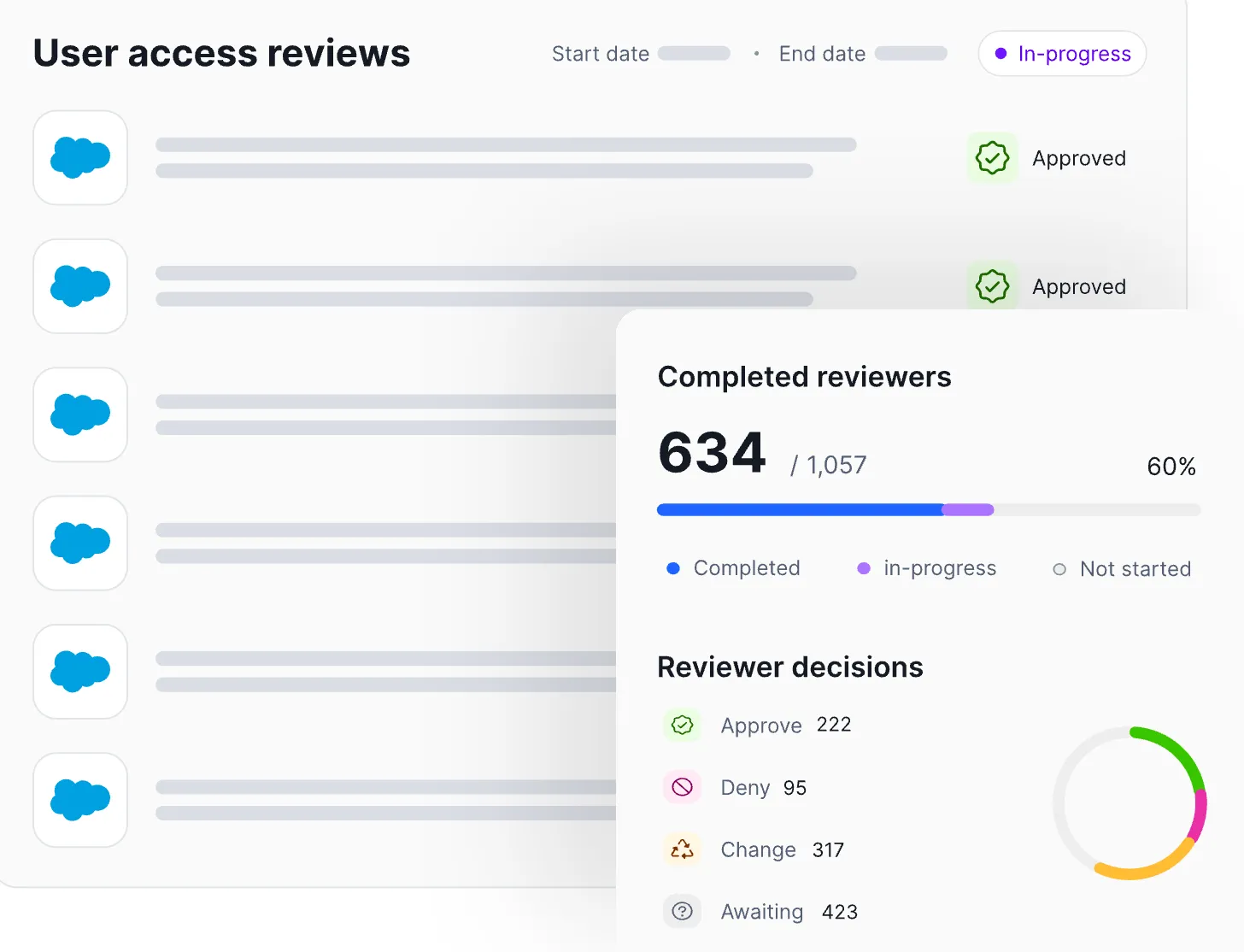
Most review processes treat all access the same, regardless of risk or usage. Linx starts from the opposite premise: Not all permissions matter equally.
Linx replaces access lists with clear recommendations that help reviewers focus on decisions that actually reduce risk (such as identifying unused admin roles or access that violates least-privilege expectations).
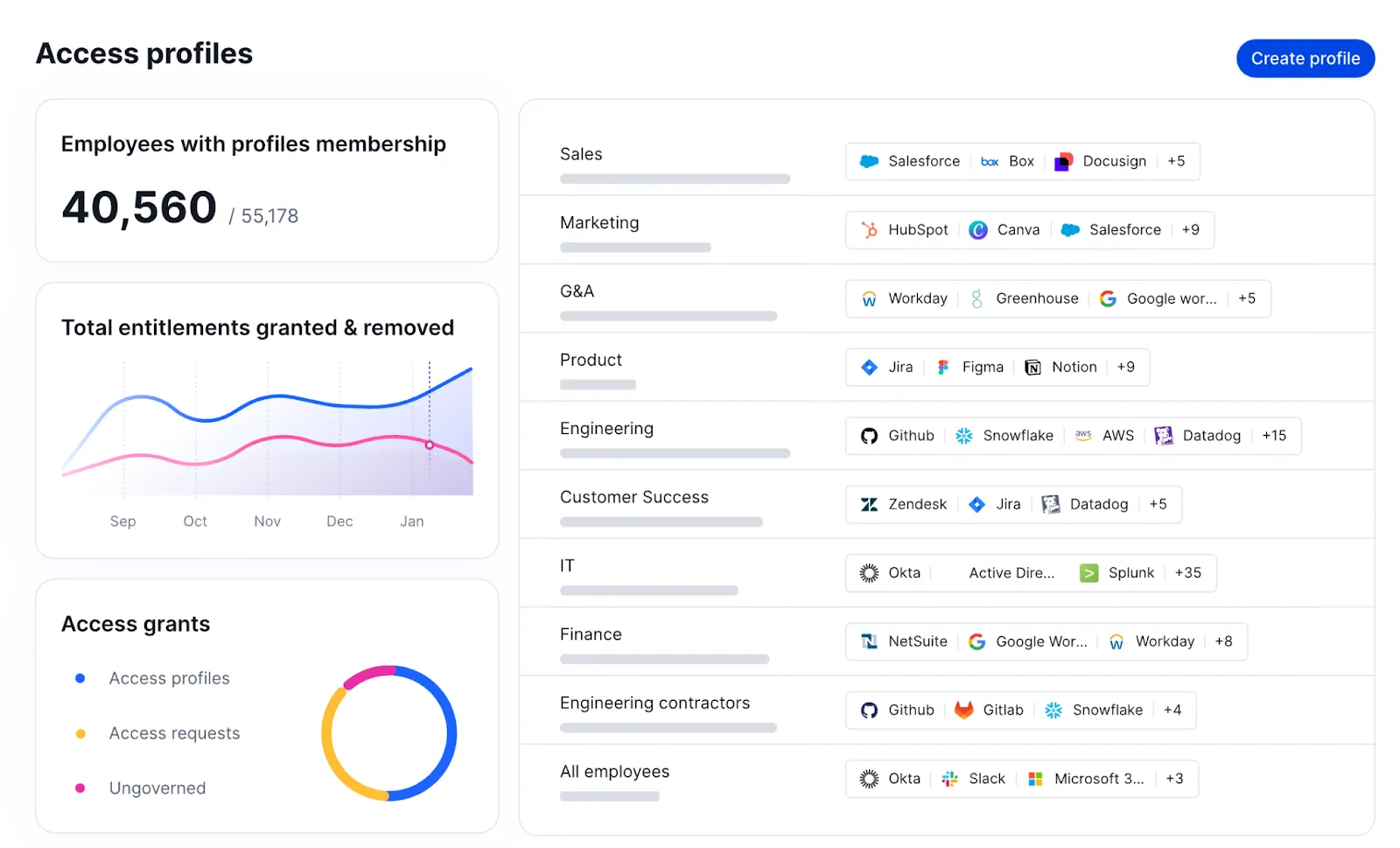
Access profiles in Linx group related permissions together so reviewers can evaluate access at the profile level rather than reviewing many individual entitlements:
Continuous governance shifts the role of access reviews. Rather than serving as the primary control, reviews act as a validation step on top of ongoing monitoring and remediation.
“Ongoing” is the key word here. Linx continuously monitors access as it changes. Rather than letting risk accumulate until the next scheduled certification cycle, Linx flags risky access combinations, unused privileges, and newly elevated roles in real time.
The Linx MCP Server exposes governance actions through policy-driven automation interfaces, allowing identity teams and automated tools to remove excessive or outdated permissions when they no longer align with role expectations or governance policies.
The main takeaway? Linx empowers teams to remediate issues immediately or queue them for review, instead of only uncovering them during a scheduled review months later.
In practice, this means UARs become shorter, more targeted, and easier to defend. Auditors still get clear certification records, but those records are backed by continuous monitoring and remediation, not last-minute cleanup.
As environments grow more complex and identity becomes the primary security perimeter, point-in-time certifications alone are no longer enough. Organizations that rely solely on periodic reviews will continue to struggle with rubber stamping, incomplete context, and access that drifts out of alignment with real-world roles. The best IGA solutions, like Linx, automate access reviews and provide real-time visibility and governance.
The path forward isn’t eliminating UARs. It’s strengthening them with context, automation, and continuous oversight so reviews become informed validation checkpoints rather than large-scale cleanup exercises. To test your UAR readiness, Checkout our user access review checklist.
If you want to see how continuous identity governance changes the equation, request a demo to experience Linx’s approach to User Access Reviews.
Identity governance and administration (IGA) solutions manage the lifecycle of user identities and their permissions across an entire organization, providing full coverage for on-premises, cloud, and hybrid environments. With IGA, you can control who has access to which systems, enforce policies, and provide audit trails.
IGA is critical for security. Within an organization, the number of identities can easily reach into the thousands. Employees, contractors, partners, service accounts, and principals may have access to dozens or hundreds of applications.
Without proper governance, overprivileged access can lead to breaches at scale. Attackers just need access to a single overprivileged account, and then they can move laterally until they hit the systems they’re interested in. (Read our article about the anatomy of an identity breach to learn more.)
At the core of IGA is identity lifecycle management (ILM), which is the end-to-end process of managing identities from creation and modification (for role changes) to deletion. User lifecycle management is a subset of ILM that focuses on human identities, but modern platforms extend lifecycle management to non-human identities as well.
One important note: Most IGA tools are not security tools; they’re IT administration tools built to address provisioning and lifecycle management problems. A security-first IGA solution like Linx Security evaluates every entitlement, making it easy to understand the potential damage it could cause.
Asking targeted questions is the best way to determine whether the IGA tool you’re considering will strengthen your security posture. The right questions center on the common failure points for IGA solutions, not the checkbox features every vendor supports.
Below, you’ll find a structured framework for the top 10 questions that truly matter. Each section includes context for why the question is important, real benchmarks for good and bad answers, and a discussion of how tools that fall short can lead to vulnerabilities.
Traditional IGA solutions were built for compliance, not security. Linx is different.
With Linx, you get an AI-native, security-first IGA solution. All of Linx’s features are purpose-built to give identity teams the visibility and context they need to reduce the blast radius of every identity in your organization.
Linx uses a graph-powered architecture to map every identity to every permission, resource, and relationship across your environments. It offers out-of-the-box automated remediation and a faster time to value with pre-built integrations and no-code connectors.
And with Linx Autopilot, teams can now deploy AI agents that work continuously on their behalf. Autopilot monitors identity environments 24/7, detects meaningful changes, evaluates risk in context, and takes action in real time.
Identity governance and administration solutions ensure that the right people have access to the right resources. Because a single over-privileged identity can become an entry point for a full-scale breach, the IGA solution you choose should be a security control that shows you exactly how large your blast radius is when an attack happens.
If you are ready to start selecting an IGA platform but don't know where to start, check out our blog post on the top IGA tools. Or, if securing agentic identities is your top priority, check our our guide to AI access control tools.
The 10 questions in this article help you separate IGA solutions that look good on paper from vendors that actually secure identities in practice. They empower you to make a choice that slashes risks and provides immediate value.
That’s where Linx stands apart.
If you’re ready to see what AI-native, graph-powered IGA looks like in practice, request a demo of Linx.
We're at one of those rare moments where an entire software category gets rewritten from scratch. Not improved. Replaced. AI isn't making identity governance faster - it's making the old architecture obsolete.
When Niv and I started Linx two years ago, we made a bet: that the identity governance category was overdue for a fundamental rethink, and that AI-native architecture - not AI bolted onto legacy infrastructure - would be what made that possible. That the future of IGA wasn't periodic reviews and manual workflows. It was continuous, autonomous, and built for a world where humans, machines, and AI agents all coexist inside the same enterprise.
Today, I'm proud to announce that Linx Security has raised a $50M Series B, led by Insight Partners, with continued support from Cyberstarts and Index Ventures - bringing our total funding to $83 million. And alongside this round, we've launched Linx Autopilot: the industry's first AI agent purpose-built for Identity Governance and Administration.
This isn't just a funding milestone. It's a signal that the IGA category is at an inflection point - and that Linx is leading it.
The identity landscape has been transformed by three forces converging at once.
First, AI agents are proliferating inside every enterprise - not as experiments, but as active participants in business workflows. They hold credentials. They access sensitive systems. They act with autonomy. And almost none of today's governance frameworks were built to manage them.
Second, the attack surface has exploded. One breach, one over-privileged service account, one dormant credential - and the damage can be catastrophic. Boards know it. CISOs feel it daily. The compliance frameworks are finally catching up.
Third - and this is what excites me most - the technology is finally ready. AI-native architecture makes it possible to do in seconds what traditional tools take weeks to accomplish: detect, evaluate risk in context, and act. Not reactively. Continuously.
IGA was always treated as a necessary evil. A compliance checkbox. Something you suffered through. We built Linx on the premise that it doesn't have to be that way.
The enterprise of 2026 doesn't look like the enterprise IGA was designed for. AI agents are being provisioned inside every workflow. Non-human identities now outnumber human ones. The attack surface isn't growing linearly - it's multiplying. And the governance frameworks built for a world of on-prem directories and annual access reviews were simply never designed for this reality.
Linx is built AI-native from the ground up - not AI layered onto legacy architecture. That distinction matters more than it might sound. It's what allows us to move from periodic, reactive governance to something fundamentally different: continuous, autonomous identity security that operates at the speed of the business and the speed of the threat.
Think of it as having a security operator working 24/7 on your behalf - one that monitors every identity in your environment, detects risk in context as it emerges, and acts before the damage is done. When a privileged account behaves unexpectedly, it responds. When an AI agent is provisioned with excessive permissions, it sees it. When an employee moves roles and leaves ghost access behind, it remediates - before an attacker finds it first.
Security teams don't lose control. They gain leverage. The tedious, repetitive work gets handled autonomously. The decisions that require human judgment get escalated. That's what modern identity governance looks like - and that's what we're delivering.
None of this happens without the people.
To Niv - twenty years of shared history, and I still learn something from you every week. Building this company alongside you has been one of the great privileges of my career. You push this product to places I wouldn't have imagined.
To Sarit - your technical vision and relentless standards are woven into every line of this platform. What you've built with the engineering team is something we'll be proud of for a long time.
To our entire Linx team - 100 people who bet on a vision and made it real. Every customer win, every product breakthrough, every late night - that's us, together. I'm incredibly proud of what we've built as a team.
To Teddie, Elan and the Insight Partners team - your belief in where this market is going gave us a true partner for the next chapter. And to Gili at Cyberstarts, and Shardul at Index Ventures - you've been with us from the beginning, and your conviction in this vision has never wavered. We don't get here without all of you.
And to our customers - the security leaders and identity practitioners who chose to build with us early, challenged us to be better, and trusted us with what matters most. You are the reason we do this. Your trust is the highest validation we know.
The market isn't just ready, it's asking for it. Every security leader we talk to, every enterprise scrambling to govern AI agents they provisioned last quarter with no visibility into what they can access, confirms what we believed two years ago: this category was overdue, and the moment is now.
What comes next is simple to say and hard to execute: we scale. We're growing the team, accelerating the Autopilot roadmap, and going deeper with the enterprises already trusting us to govern millions of identities in production.
The IGA category is being rewritten. The window to define what the next generation looks like is open.
We intend to define it.
- Israel Duanis, CEO & Co-Founder, Linx Security

NEW YORK, March 31, 2026 - Linx Security, a pioneer in modern identity security and governance solutions, today announced a $50 million Series B financing round led by global software investor Insight Partners, with continued participation from Cyberstarts and Index Ventures. This brings Linx’s total funding to $83 million. The 100-person startup has already signed multimillion-dollar contracts with banks, healthcare companies, and Fortune 500 firms, governing millions of identities globally.
As enterprises adopt cloud, automation, and AI, the number of identities inside organizations has exploded, now spanning not just employees, but machines, services, and AI agents, which outnumber humans by roughly 80 to 1. Traditional identity governance tools, built for a smaller and more static environment, have struggled to keep up, leaving security teams with limited visibility, slower response times, and expanding risk at a time when nearly 90% of security incidents involve identity-related failures.
Founded in 2023 by cybersecurity veterans Israel Duanis and Niv Goldenberg, the company provides an AI-native platform that continuously maps, monitors, and governs all identities across the enterprise, human, non-human, and agents alike. By replacing manual processes and periodic reviews with real-time detection and automated remediation, Linx enables organizations to reduce identity risk without slowing down the business.
“Identity governance has shifted from a back-office compliance function to a core pillar of enterprise security,” said Israel Duanis, CEO and co-founder of Linx Security. “This funding allows us to scale faster and meet the growing demand from organizations that need real-time visibility and control over every kind of identity operating in their environment.”
Linx recently introduced Linx Autopilot, the first autonomous AI agent designed to fundamentally change how identity governance is managed. Moving away from the constraints of manual oversight and reactive processes, Autopilot continuously monitors identity activity, detects meaningful changes in real time, and takes action, either resolving issues automatically or escalating when needed. By operating across human, machine, and agents, it enables security teams to move from periodic control to continuous, intelligent enforcement, without adding operational overhead.
The new funding will support Linx’s next phase of growth, including expanding its global footprint, scaling enterprise go-to-market efforts, and accelerating product development around autonomous identity governance.
"Linx is reimagining IGA architecture to tackle the emerging problem of agent governance. The company’s AI-first approach, along with the introduction of Linx Autopilot, well positions Linx in this critical category and we're thrilled to partner on this journey,” said Teddie Wardi, Managing Director at Insight Partners.
"We backed Linx at inception because we believe identity would become the core control layer of modern security,” said Gili Raanan, Founding Partner at Cyberstarts. “AI agents are rapidly expanding the number of identities operating inside organizations, turning identity governance from a back-office compliance task into a board-level risk. Linx is building the platform to govern that new reality.”
About Linx Security
Linx Security is the AI-native identity security and governance platform built for the era of AI agents and non-human identities. Founded in 2023 and headquartered in New York, the company delivers unified visibility, continuous risk detection, and autonomous remediation across every identity in the enterprise - human, non-human, and AI. Backed by Insight Partners, Index Ventures, and Cyberstarts, Linx Security is trusted by identity-intensive enterprises globally to eliminate identity risk without slowing the business. For more information, visit www.linx.security.
About Insight Partners
Insight Partners is a global software investor partnering with high-growth technology, software, and Internet startup and Scale-up companies that are driving transformative change in their industries. As of June 30, 2025, the firm has over $90B in regulatory assets under management. Insight Partners has invested in more than 875 companies worldwide and has seen over 55 portfolio companies achieve an IPO. Headquartered in New York City, Insight has a global presence with leadership in London, Tel Aviv, and the Bay Area. Insight's mission is to find, fund, and work successfully with visionary executives, providing them with tailored, hands-on software expertise along their growth journey, from their first investment to IPO. For more information on Insight and all its investments, visit insightpartners.com or follow us on X @insightpartners.

Reactive identity security and point-in-time checks can’t keep up with the constant change that characterizes modern identity environments, especially at scale. Employees change roles, contractors rotate in and out, and machine identities created to perform a specific task are no longer needed once the task is done.
Periodic review cycles made sense in a world where identity was changing slowly and the blast radius of a compromised account was limited. But today, a single compromised identity can cascade across different cloud environments, SaaS platforms, and CI/CD pipelines in minutes.
The 2024 Midnight Blizzard breach at Microsoft proves this point. During this attack, threat actors compromised a single test tenant account, then moved laterally to high-value assets like cybersecurity team accounts and even executives’ accounts.
The difficult truth? Identity is now the quickest path attackers can take to reach critical systems, and reactive security isn’t enough. (Learn more about why identity breaches are preferred by attackers here.)
Identity risk arises from the slow accumulation of misconfigurations and access changes that happen between governance reviews.
Typically, role drift and privilege accumulation are the most common sources of identity risk in any organization. Even though an access grant for a specific engineer might have been legitimate when it was approved, permissions often persist long after a role change makes them irrelevant.
Access entitlements across multiple systems exacerbate this issue, as a single user might have multiple identities and permissions across different cloud providers, SaaS applications, CI/CD platforms, and other tools.
Risks don’t live in these systems in isolation. Think of a user who has read-only access to a production AWS account but admin access to a CI/CD pipeline that can deploy resources to that account. Human reviewers and review tools that look at systems independently won’t catch this escalation path.
And the problem compounds when time enters the equation. When someone is granted permanent elevated access to address a particular issue instead of JIT admin access, the window between that change and the next governance review becomes especially dangerous.
For example, a developer might get admin access to a production environment to help troubleshoot an outage. Though the incident is resolved within hours, the elevated permissions persist.
If an attacker compromises this account, the blast radius can be significant: They’ll have access to all applications, secrets, and workloads that are running in that production environment. Identity solutions that conduct periodic reviews will eventually catch over-privileged access, but there might be months of exposure in the meantime.
Finally, department restructures happen all the time. In fact, with AI adoption, they’re more frequent than ever. These organizational changes shift the access context entirely. For instance, a team that used to need access to a particular environment may no longer exist in the same form. Despite this shift, their permissions usually stay in place until the next review cycle, resulting in over-privileged access on a team-wide scale.
Many enterprises believe that they’re keeping pace with risks because they’ve invested heavily in Identity Governance and Administration (IGA) platforms and Privileged Access Management (PAM) solutions. But these tools flag risks long after they’ve been introduced.
Even the newer generation of identity security tools that have AI and machine learning (ML) capabilities still function as analysis engines. They identify issues and give you recommendations on how to solve them, but they don’t act on your behalf.
Without automated provisioning and deprovisioning tied directly to lifecycle events, permissions drift between review cycles with no option to correct them.
The organizations that are effectively slashing identity risks are those embracing AI identity security automation in 2026: continuous, always-on coverage from autonomous AI that can detect, prioritize, and remediate access issues in real time, with minimal human oversight.
Most of what the market calls today “AI-powered identity security” is actually AI-assisted security. As we’ve seen, these tools detect anomalies and generate recommendations. They might identify that a particular user has more privileges than most of their peers or that a service account hasn’t been used for a long period of time. These insights are useful, but AI-assisted tools leave a critical gap between identifying an issue and remediating it.
Depending on a human for input isn’t always the wrong move. Yet workflows where humans have to analyze and act on every notification from AI tools keep engineers trapped in a cycle of alerts. After all, human bandwidth will never be able to match the pace at which identity risks are growing.
To free engineers up to innovate and turbocharge remediation speed, autonomous systems handle straightforward fixes and repetitive actions. They determine when human input isn’t required by evaluating context. Then, they decide on an appropriate response and execute the corresponding workflow.
By leveraging an autonomous security agent, the entire identity security workflow shifts from “send an alert and a recommendation to a human” to “assess the problem, decide what to do about it, and act accordingly.”
With Linx Security’s Autopilot, teams can now deploy AI agents that work continuously on their behalf: monitoring their identity environments 24/7, detecting meaningful changes as they happen, evaluating risk in context, and taking action in real time whenever there are issues.
“Security teams don’t need more noise—they need meaningful leverage,” says Niv Goldenberg, Chief Product Officer and Co-Founder at Linx Security. “Autopilot allows organizations to modernize identity security responsibly, combining continuous AI-driven execution with human expertise.”
In a periodic review model, there’s a gap between when identity risks emerge and when governance catches up. Access changes constantly, governance occurs quarterly, and attackers operate within this window.
With autonomous identity security, this gap is closed by autonomous agents that monitor access changes in real time, evaluate them against an organization's in-play policies, and take immediate action to resolve any issues.
Autonomous identity security is where Linx stands apart.
“Autopilot marks the beginning of a new chapter for Linx,” says Israel Duanis, CEO and Co-Founder of Linx Security. “Our vision is to build a security platform that doesn’t just inform teams—it operates alongside them. The future of identity security isn’t more alerts or more manual reviews. It’s intelligent systems that continuously strengthen posture while keeping humans in control. This launch establishes Linx as a leader in autonomous identity security and sets the foundation for where our platform is headed.”
If you want to see Autopilot in action, join us for an in-person demonstration during the RSA Conference (March 23–26). We’ll also be hosting a live virtual demonstration on April 9th at 11 a.m. ET.
To see Autopilot live virtually, schedule a demo to get a personalized demonstration.




.webp)