


Featured
Jun 9, 2026
Introducing Linx AI Access Control: Real-Time Governance for AI Agent Actions



[New York, New York], USA — [09/30/2025] — Linx today announced its inclusion in the Microsoft Security Store Partner Ecosystem. Linx was selected based on their proven experience with Microsoft Security technologies, willingness to explore and provide feedback on cutting edge functionality, and close relationship with Microsoft.
"Microsoft is a foundational company in the identity space, and are uniquely aware of the importance of making modern identity security and governance accessible and easy to use. We’re honored to work closely with their security teams bringing that vision to life.”
Israel Duanis, CEO & Co-Founder, Linx
“The Microsoft Security Store is designed to simplify and strengthen how organizations approach cybersecurity. By offering a curated selection of trusted solutions and AI agents, we help Security and IT teams quickly find, purchase, and deploy technologies that integrate seamlessly with Microsoft Security. With simplified billing, streamlined deployment, and verified integrations, the Security Store empowers defenders to accelerate their response, improve their security posture, and focus on what matters most.”
Dorothy Li, Corporate Vice President, Security Copilot, Ecosystem and Marketplace
Linx is collaborating with Microsoft to help shape the development of the Microsoft Security Store, providing feedback on new features, integration experiences, and customer needs. By publishing certified solutions and AI agents that integrate seamlessly with Microsoft Security products, Linx is making it easier for organizations to discover, purchase, and deploy trusted security technologies. Through the Security Store, Linx is helping customers accelerate their security outcomes and simplify operations with solutions that are vetted, easy to deploy, and designed to work together.
The Microsoft Security Store is setting a new benchmark for cybersecurity procurement and deployment. By centralizing a wide range of security solutions and AI agents—organizations can now streamline how they discover, acquire, and operationalize advanced security technologies. With features like industry framework alignment, simplified billing, and guided deployment, the Security Store helps security teams reduce complexity, accelerate adoption, and maximize the value of their security investment
Linx gives identity teams unified visibility, governance, and risk remediation across human and non-human identities, for cloud, SaaS, on-prem, and custom applications. With a graph-powered view and AI guidance, Linx users enforce least privilege, replace standing access with JIT, and turn UARs from rubber-stamping into evidence-backed decisions.

At Linx Security, our mission has always been clear: to make identity security and governance radically intelligent and radically autonomous. We started this journey by introducing the Linx AI-assistant, a natural language interface that made querying complex identity data effortless for every user. Then we launched the Linx MCP Server, which gave AI agents the ability to not just observe identity environments but to reason, act, and remediate at scale.
Today, we’re taking the next step forward: the Linx AI-Agent AKA Autopilot.
Identity teams today face a daunting paradox.
The result? A system designed to protect the enterprise becomes a bottleneck - slowing down the business, draining team resources, and leaving cracks attackers can exploit.
Traditional tools have focused on visibility or automation, but both fall short. Visibility tells you what is wrong, automation executes what you tell it to do - but neither can reason, adapt, or keep up with today’s dynamic environments.
That’s why we built the Linx AI-Agent: a trusted teammate that understands context, learns from patterns, and takes on the heavy lifting of identity governance.
The Linx AI-Agent isn’t just a smarter tool; it’s a shift in how identity governance and security gets done. From detecting risks, making governance decisions, executing remediation, and continuously optimizing policies, Linx AI-agent is there for you.
Proactively close identity gaps before attackers exploit them, without overwhelming teams with false positives, with AI-powered investigation.
Effortlessly perform complex queries by simply asking the questions interested in, and letting the Linx AI agent do the rest for you.
Faster approvals, fewer delays, and assurance that risk is never overlooked with AI-powered recommendations for access requests.
When an urgent JIT request comes in, the AI-Agent evaluates the context—who’s asking, what they need, when, and why—and guides approvers with confidence.
Compliance at scale, reduced audit fatigue, and confidence that reviews are meaningful - not just checkboxes with AI-powered recommendations for User Access Reviews (UARs).
During audits or quarterly certifications, instead of manually combing through spreadsheets, managers receive clear, contextual recommendations on which access to keep, remove, or further review.
Quickly reduce risks instead of chasing open remediation tickets that are pending busy IT teams. When risky or unused access is detected, the AI-Agent doesn’t just flag the issue -it provides clear remediation options and, where authorized, executes them automatically.
Faster employee productivity, reduced ticket volume, and stronger security baselines with AI-powered Access Profiles.
Imagine a new employee starting on day one. Instead of waiting weeks for the right permissions - or worse, copying access from a colleague—the AI-Agent builds a contextualized, least-privilege access profile instantly.
Empower teams to move quickly without exposing sensitive systems to standing privileges with AI-powered Just-in-Time (JIT) Access Policies.
When a user needs elevated permissions for a critical system, the AI-Agent automatically reviews and analyzes the request, and provisions access for just the right duration - no more, no less.
Real-time visibility for executives, faster audit readiness, and less dependence on IT or data engineering with AI-powered Custom Reports.
Security leaders and auditors can request any report in plain language - from “all privileged users in finance with unused entitlements” to “all JIT requests in Q2” - and the AI-Agent delivers, instantly.
Tailored risk detects that adapts to your business model, ensuring governance aligns with real-world threats with AI-powered Custom Risk Issues.
Every organization has unique risks. The AI-Agent allows security teams to define custom risk conditions - like separation-of-duties violations between finance and procurement - and continuously monitor for them.
Each step of our journey has laid the groundwork for this moment. The AI-assistant gave every user the power to query complex identity data in plain language. The MCP Server opened the door for agents to act safely and intelligently across enterprise systems. Now, the AI-Agent brings true autonomy to identity governance - relieving teams of repetitive decisions, adapting to organizational change, and securing access at business speed.
This is just the beginning. In the coming weeks, we’ll publish deep-dives exploring each capability in action - from how Access Profiles eliminate role bloat, to intelligent and automated review, provisioning and deprovisioning of access.
With the Linx AI-Agent, identity security and governance finally becomes what it was always meant to be: continuous, contextual, and autonomous.
Your identity future starts now.

BlackHat 2025 just confirmed what security leaders have been whispering in hallway conversations: traditional IAM is fundamentally broken, and the industry finally has a name for the solution.
After three days at Mandalay Bay, one thing became crystal clear. The cybersecurity industry has reached an inflection point. The conversations happening between sessions, in vendor booths, and during networking events all circled back to the same fundamental challenge: organizations can't secure what they can't see, and most can't see their identity landscape at all.
This visibility crisis has a name now. In its 2025 Hype Cycle for Digital Identity, Gartner introduced Identity Visibility and Intelligence Platforms (IVIP) as an emerging category. But BlackHat revealed that while the industry is just recognizing this need, some organizations are already building solutions that go far beyond basic visibility.
The most revealing conversations at BlackHat weren't happening on stage. They were happening when security leaders admitted they couldn't answer basic questions about their own environments.
"Who has admin access to our production AWS accounts?" Simple question. But across multiple vendor demonstrations and client discussions, the same pattern emerged: security teams would need days or weeks to provide a complete answer, assuming they could provide one at all.
BlackHat 2025 showcased the scale of this problem. Presentations highlighted that organizations are dealing with 40:1 machine-to-human identity ratios. AI initiatives are creating thousands of new service accounts, API keys, and autonomous agents daily. Meanwhile, attackers are increasingly targeting identity systems directly, knowing that traditional perimeter defenses can't protect what organizations can't even inventory.
The statistics presented throughout the conference painted a stark picture. With 10.53 billion visits to AI sites in January 2025 alone, the explosion of AI adoption isn't just changing how business operates. It's fundamentally breaking traditional approaches to identity management.
Gartner's introduction of Identity Visibility and Intelligence Platforms as a category validates what BlackHat made obvious: traditional IAM tools weren't designed for today's identity complexity.
As Gartner defines it, IVIPs "gather, categorize, and visualize identity data across directories, tools, and multiple IAM domains." The key insight is that these platforms act as an intelligence layer that makes sense of identity data scattered across environments.
The vendor announcements at BlackHat supported this trend. Multiple companies showcased new capabilities focused on identity visibility, AI-powered access decisions, and autonomous security operations. The market is clearly moving toward platforms that can understand relationships between identities across systems rather than managing them in isolation.
But here's what became clear during the conference: basic visibility, while necessary, isn't sufficient. Organizations need platforms that can not only see their identity landscape but intelligently act on that information.
The most forward-thinking discussions at BlackHat centered on what comes after basic identity visibility. While IVIP addresses the "what can we see" question, the real competitive advantage lies in platforms that can autonomously understand, predict, and act.
This represents the evolution to agentic identity intelligence. Instead of just providing dashboards and reports, these platforms enable security teams to have conversations with their identity data.
Imagine asking "Show me all dormant admin accounts in Snowflake without MFA" and getting an instant, actionable answer. Or having systems that automatically detect unusual access patterns and revoke suspicious permissions before incidents occur. This isn't theoretical. Some organizations are already implementing these capabilities.
The BlackHat demonstrations that drew the biggest crowds weren't showing better visibility tools. They were showcasing platforms that could think, learn, and act autonomously on identity decisions.
While the industry catches up to what IVIP represents and vendors rush to rebrand existing tools, Linx has been purpose-built for this exact evolution.
Linx represents what comes after basic identity visibility. It's designed as an agentic identity intelligence platform that delivers the IVIP capabilities Gartner identified while enabling the autonomous decision-making that BlackHat revealed organizations actually need.
Conversational Identity Intelligence: Security teams can ask complex questions in natural language and get instant, actionable answers. No specialized query languages, no waiting for custom reports, no dependency on deep technical skills.
Autonomous Governance: The platform automatically detects policy violations, manages access reviews based on risk context, and maintains audit-ready posture without constant human intervention.
Predictive Risk Assessment: Instead of reacting to incidents, Linx identifies potential security issues before they become problems by analyzing behavioral patterns and contextual anomalies across the entire identity ecosystem.
Intelligent Automation: The system learns organizational approval patterns and automates routine access decisions while escalating only what truly requires human judgment.
What makes Linx different isn't just better visibility into identity data. It's the intelligence layer that turns that visibility into autonomous action, enabling organizations to secure their expanding identity landscape without exponentially increasing their security team headcount.
BlackHat 2025 made one thing undeniable: the organizations that will dominate the next decade are those building identity intelligence capabilities today. While others scramble to implement basic IVIP visibility, leading organizations are already deploying agentic systems that make identity security a competitive advantage rather than a constant struggle.
The window for this advantage won't stay open long. As the industry recognizes what IVIP represents and more vendors enter the space, the differentiation will shift from having identity visibility to having identity intelligence.
For organizations serious about getting ahead of this curve, the choice is clear: implement basic visibility tools and hope to upgrade later, or deploy purpose-built intelligence platforms that are already designed for the autonomous future the industry is racing toward.
The conversations at BlackHat 2025 confirmed what forward-thinking security leaders already knew: the future of enterprise security runs on intelligence, not rules. The question is whether you'll build that intelligence today or implement yesterday's solutions tomorrow.
Identiverse 2025 brought together over 3,000 identity leaders in Las Vegas-and it reinforced what many of us in the space have already been working toward: identity is no longer just a tool for access. It’s the foundation of modern security and compliance.
As long-time practitioners in this space, we weren’t surprised by the themes that dominated the keynotes, panels, and hallway conversations. But it was powerful to see the broader industry converging around the same urgent priorities we’ve been building for at Linx.
Here are five of the most important signals that emerged and how our approach at Linx aligns with where the market is heading.
AI is no longer a “what-if.” It's actively reshaping how identities are attacked-and defended. Attendees shared how generative AI is powering phishing, lateral movement, and even deepfake-based social engineering. But it’s also accelerating defense: from smarter access reviews to risk-aware automation.
Conference sentiment: Forward-looking. AI is now part of the identity stack, whether we like it or not.
The days of quarterly reviews and role-based provisioning are giving way to dynamic, signal-based governance. Triggers like inactivity, org changes, or privilege escalation are being used to adapt access decisions in real time.
Conference sentiment: Overdue. Static access models can’t keep up with today’s cloud velocity.
Between DORA, NIS2, CRA, and evolving expectations from internal auditors, compliance is putting identity in the spotlight. Organizations are under pressure to demonstrate least-privilege, clean up entitlements, and automate certifications-all without slowing business operations.
Conference sentiment: Compliance is no longer a checkbox-it’s a forcing function for modernization.
Multiple sessions highlighted the explosion of NHIs-API keys, service accounts, machine identities-that now outnumber human identities by 20:1 in many enterprises. These identities often live outside of traditional governance programs, creating massive blind spots.
Conference sentiment: High alert. NHIs are no longer niche-they’re core risk.
Identity Security Posture Management (ISPM) emerged as a key trend, as organizations look for better ways to continuously assess, manage, and enforce their identity configurations across clouds and SaaS. Unlike legacy tools focused only on provisioning or policy, ISPM bridges the gap between security context and governance workflows.
Conference sentiment: ISPM isn’t a category to watch-it’s the convergence point the industry needs.
What many were presenting as future-state aspirations are realities we’ve been delivering on:
For us, Identiverse was a momentum milestone.
We had back-to-back meetings with customers, partners, and practitioners, many of whom validated our direction and pushed for deeper collaboration. The demand for identity-first security solutions is very real-and the market’s readiness for change is accelerating.
The highlight? The launch of the Linx MCP Server-our new lightweight, cloud-native decision point for enforcing real-time access policies across identity providers, SaaS apps, and infrastructure.
It was a hit.
The booth buzz, live demos, and follow-up interest confirmed what we hoped: teams are hungry for elegant, enforceable policy-without the overhead.
At Linx Security, our mission is to make identity governance and administration both radically intelligent and radically autonomous. That mission just took a major leap forward.
Earlier this year, we introduced the Linx AI-assistant - a powerful natural language interface that lets anyone ask complex identity questions and get clear, actionable answers without writing a single query.
Today, we’re taking the next step forward.
We are excited to announce the Linx MCP Server - a powerful new runtime service that unlocks seamless interactions between large language models (LLMs) and your identity security and governance data. This is more than just a backend update: it's a strategic foundation that transforms the Linx Platform into a truly agentic system - where intelligent agents don’t just observe your environment, they understand, reason, and act.
The Model Context Protocol (MCP) is rapidly becoming the standard for connecting AI models to enterprise systems. Originally introduced to bridge the gap between LLMs and external tools, MCP enables structured, secure communication between AI agents and real-world applications, APIs, and databases.
But while others have used MCP to enrich general-purpose agents, Linx is the first to bring it deeply into the heart of Identity Security and Governance.
Our new MCP Server externalizes three powerful capabilities of the Linx Platform:
Deep graph-based visibility, insights and intelligence: Let agents ask and query the Linx Identity Graph to answer any question on the identity data.
The Linx MCP Server is designed to plug directly into the rapidly expanding world of AI agents. It’s already integrated with the Linx AI-assistant, and now, it allows you to effortlessly set bi-directional integrations with third-party agents like ChatGPT, Claude, and Gemini.
That means your favorite AI copilots can:
We're not just making identity security and governance searchable and actionable, we are making it continuous and autonomous.
Don't let a lack of personnel slow you down! With Linx MCP, you can automate your processes without running a single line of code. Whether you're removing access to overprivileged accounts or driving a User Access Review campaign to completion, it's never been easier to secure and govern identity.
Try it now and experience how effortlessly you can empower your team and boost your IAM program with an AI-native Identity Security and Governance Platform. Schedule a demo to start your journey toward an agentic identity security and governance program today!
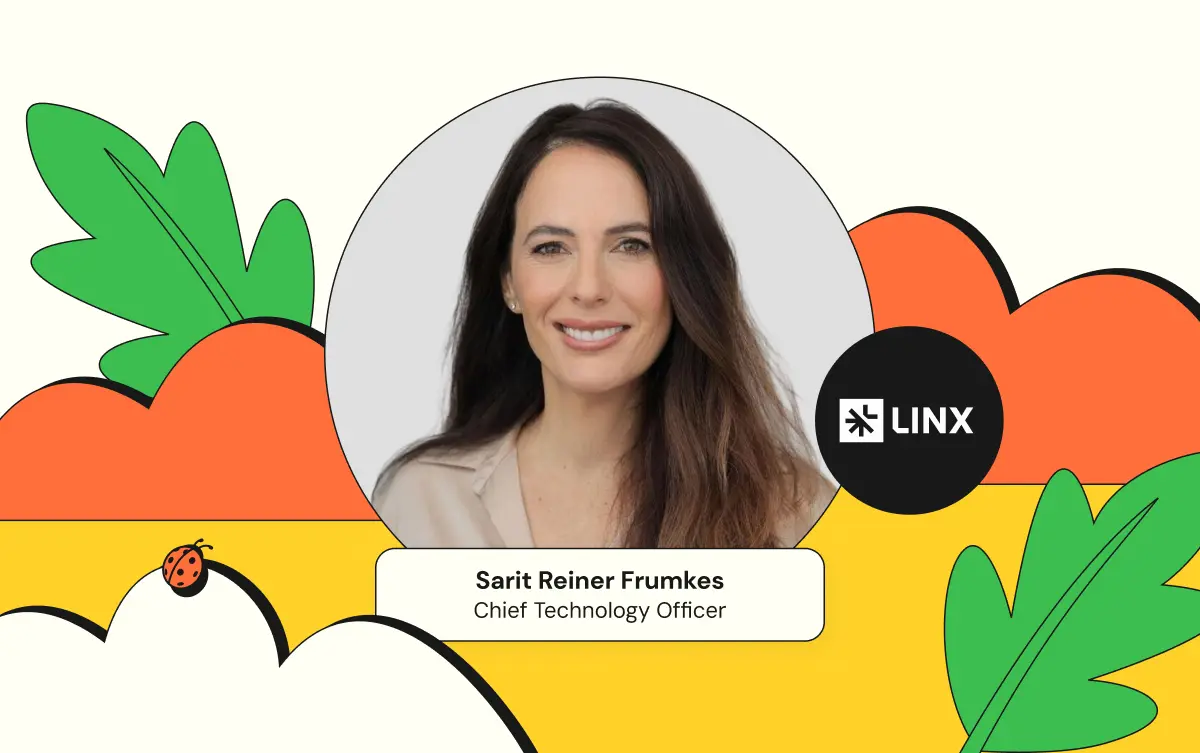
Identity security is broken. And attackers know it.
After more than 25 years in the cyber arena, approaching challenges from different angles and perspectives, one thing has remained clear: identity security is one of the most critical areas in the field—but one where innovation hasn’t kept pace with the evolving threat landscape and business reality.
For years, organizations have struggled to secure identity, not because they weren’t trying, but because the tools they relied on weren’t built for the way modern enterprises operate. Identity is no longer confined to a corporate perimeter. It spans SaaS applications, cloud workloads, privileged accounts, third-party integrations, and an increasingly complex hybrid environment. Yet, the security solutions designed to protect these identities have failed to keep pace.
I’ve seen this challenge firsthand throughout my career - at the Israeli Prime Minister’s Office, at Microsoft, and at Payoneer. And I’ve seen how slow the security industry has been to adapt.
Linx Security is different. And that’s why I’m here.
Enterprise security has undergone a massive shift in the past decade. We’ve moved from firewalls and VPNs to zero trust architectures, cloud-native security, and AI-driven threat detection. Yet, despite all this innovation, identity security has remained stubbornly stuck in the past.
Here’s the reality:
The result? Identity is the single largest attack vector today - and the traditional solutions meant to address it are falling short.
Linx Security is solving this problem at its core. Instead of treating identity as just another compliance checkbox, Linx has built an AI-driven platform that continuously maps, monitors, and mitigates identity risk in real time. It provides complete visibility across the modern enterprise—not just who has access, but what they’re doing with it, and what risks that creates.
This is what enterprises desperately need: a way to not just govern identity but to truly secure it—proactively, continuously, and at scale.
Beyond the technology, what truly sets Linx apart is the exceptionally talented team behind it. From world-class security experts to visionary builders, Linx has assembled a group of people who don’t just understand the challenges of identity security—they’ve lived them. What unites them is a shared sense of purpose and a deep commitment to helping customers solve real, urgent problems. The culture here is one of relentless innovation, deep collaboration, and an unshakable drive to make a meaningful impact. It’s a team that moves fast, thinks big, and is driven by a shared mission: to redefine how enterprises secure identity in a world where the old approaches no longer work.
At the heart of it all are the founders—CEO, Israel Duanis, and CPO, Niv Goldenberg—deeply experienced, visionary leaders who have built and scaled security products at the highest levels. What stood out most to me was their deep knowledge of security, their unwavering focus on customers, their ability to build and inspire a world-class team, and their bold approach to innovation. They’ve created a culture where solving real customer problems is the driving force, where top talent thrives, and where big ideas are turned into action.
When I first encountered Linx, it reminded me of the early days of some of the biggest shifts in enterprise security—when companies like Microsoft, Wiz, and CrowdStrike redefined their categories. Linx is doing the same for identity security.
I’ve spent my career scaling security solutions for some of the world’s most complex environments.
At Microsoft, as Vice President of Product & Engineering, I led the integration of CyberX, Aorato, and Adallom into Microsoft’s security ecosystem—transforming best-in-class security technologies into enterprise-ready solutions used by Fortune 500 companies.
At Payoneer, as CTO, I drove platform innovation and system modernization, securing one of the largest global financial infrastructures—enabling businesses to scale securely without compromising compliance.
Now, at Linx, I see a once-in-a-decade opportunity to redefine how enterprises protect identity.
Linx Security isn’t just building another security product. We’re building the future of identity security.
The old ways—reactive identity governance, slow certification cycles, and fragmented visibility—have run its course. Attackers move fast, and security teams need solutions that can move faster.
That’s what we’re delivering at Linx.
I’m excited to be part of this journey—working with a team of security veterans, builders, and innovators to solve one of cybersecurity’s biggest challenges.
If you’re a security leader looking to rethink identity security—or a technologist who wants to help build the future—let’s talk.
The identity security market is making headlines once again as SailPoint returns to the public markets, marking the first major tech IPO of 2025. This moment is more than just a financial milestone; it is a clear indication that identity and access management (IAM) is now a top-tier priority for enterprises worldwide.
As someone who has spent years in the cybersecurity industry, I see this as a major inflection point—not just for SailPoint, but for the IAM landscape as a whole. The challenges around access management, security, and automation have been growing exponentially. Organizations are increasingly recognizing that traditional IAM solutions alone are not enough to meet the demands of modern security and compliance frameworks.
The cybersecurity industry has witnessed a shift over the past decade: IAM has moved from an IT-driven necessity to a strategic business function. The return of SailPoint to the public market signals three critical trends:
Investor confidence in IAM’s growth – The IPO underscores the increasing demand for IAM solutions as enterprises grapple with SaaS sprawl, cloud adoption, and decentralized workforces. Identity security is no longer an optional investment; it is essential.
The need for more innovation in IAM – Traditional identity governance solutions have played a foundational role, but modern security challenges demand more than what legacy IAM tools were designed to handle. Businesses today require AI-driven insights, automation, and real-time decision-making to manage identity risks effectively.
Market expansion and competitive evolution – While SailPoint’s IPO brings renewed attention to IAM, it also highlights the increasing fragmentation and specialization in the market. More enterprises are looking for solutions that go beyond governance and compliance, focusing on proactive identity security measures.
This IPO is just the latest marker in an ongoing shift. The future of IAM is moving toward:
AI-driven identity security – As enterprises scale, the manual processes of legacy IAM systems become a bottleneck. AI-powered IAM solutions will enable automated decision-making, real-time risk assessments, and contextual access control.
Seamless integration across ecosystems – IAM is no longer just about managing identities; it must be deeply embedded in an organization's broader security framework, from zero-trust architectures to identity threat detection and response (ITDR).
Improved user experience without compromising security – The next era of IAM will focus on making identity security effortless, ensuring that security teams are not overburdened with manual access reviews and that employees can get the right access at the right time—without unnecessary friction.
At Linx Security, we view this as a rising tide that lifts all boats. The renewed focus on IAM validates what we—and other forward-thinking security innovators—have been building. Our approach to AI-driven identity security addresses the gaps left by legacy IAM solutions, eliminating inefficiencies and reducing risk in ways traditional tools cannot.
Automating the IAM bottlenecks – Our Linx AI Assistant is designed to cut through access request backlogs, speed up investigations, and streamline certifications, allowing security teams to focus on higher-level threats.
Enhancing identity decisions with AI – We enable security leaders to make faster, smarter decisions by providing real-time, context-aware insights instead of relying on outdated governance processes.
Addressing the future of IAM head-on – As the IAM market matures, the need for intelligent identity security automation and seamless security integrations will only grow. We are already leading this shift with cutting-edge AI solutions.
SailPoint’s IPO is a milestone, but the real transformation in IAM is happening now. The demand for more intelligent, automated, and scalable identity security solutions is growing rapidly, and the companies that can meet these needs will define the next decade of cybersecurity.
At Linx Security, we’re not just watching this market evolve—we’re actively shaping it. We believe in a future where identity security is effortless, adaptive, and built for the speed of modern enterprises.
The window of opportunity is open. The next generation of identity security will be built on automation, precision, and real-time security outcomes—and that’s exactly what we’re delivering at Linx Security.
SailPoint’s IPO proves that identity security is an unstoppable force in cybersecurity. The real question is: Who will define the next era of IAM?
We plan to be at the forefront.

In modern IT ecosystems, identity security has become a cornerstone of organizational resilience. As enterprises adopt increasingly complex digital infrastructures, managing and safeguarding identity and access relationships is critical to preventing unauthorized access, mitigating insider threats, and ensuring regulatory compliance. However, deciphering the intricate web of identity and access relationships often necessitates advanced technical proficiency, thereby inhibiting security and IT teams from efficiently extracting crucial insights. The process of querying complex identity data should be streamlined and accessible, even for those who lack expertise in query syntax and technical acumen.
The domain of Identity and Access Management (IAM) has undergone substantial evolution. Enterprises today administer vast identity landscapes comprising thousands to millions of entities, each equipped with multifaceted access entitlements spanning applications, cloud infrastructures, and enterprise systems. Comprehending access structures and their security implications is challenging.
Organizations must routinely address critical security inquiries, including:
Such inquiries necessitate a profound examination of identity relationships that are frequently distributed across disparate repositories. Traditional relational databases, constrained by their rigid schema structures, struggle to model these highly dynamic and interdependent relationships, necessitating the adoption of more suitable paradigms—namely, graph databases.
Graph databases are inherently designed to represent and interrogate complex relationships with a high degree of efficiency. Unlike relational databases that encapsulate data within fixed tabular formats, graph databases structure information as nodes (entities such as users, roles, or resources) and edges (the relationships connecting these entities).
From an identity security perspective, graph databases facilitate:
For instance, a graph database can expeditiously ascertain whether an individual has indirect administrative privileges to a mission-critical system through nested group memberships. While this architectural model offers significant advantages, it also introduces an operational challenge: querying graph databases necessitates specialized expertise.
Despite their superior capability in modeling identity security, graph databases impose a steep learning curve. Extracting meaningful insights demands proficiency in sophisticated query languages such as Cypher, Gremlin, or SPARQL. Mastering these languages entails:
For example, in Cypher, a query to find all users with privileged access might look like this:
MATCH (u:User)-[:HAS_ACCESS]->(r:Resource)
WHERE r.sensitivity = 'High'
RETURN u.name, r.name;
This query retrieves all users who have direct access to high-sensitivity resources. While powerful, mastering such syntax requires specialized expertise. Security analysts, IAM administrators, and compliance teams frequently lack the requisite knowledge or bandwidth to develop fluency in such specialized query languages. As a result, they remain dependent on data engineering teams, impeding the agility required for proactive identity security management. Security analysts, IAM administrators, and compliance teams frequently lack the requisite knowledge or bandwidth to develop fluency in such specialized query languages. As a result, they remain dependent on data engineering teams, impeding the agility required for proactive identity security management.
With AI and natural language processing (NLP) making huge strides, querying graph databases no longer requires deep technical skills. Linx AI-assistant allows users to ask security-related questions in plain English and get instant, actionable insights.
Instead of formulating a complex query to enumerate all users with privileged access, one can simply ask: "Show me all dormant admin accounts in Okta that don't have MFA"
Instead of contending with Gremlin to analyze inherited permissions, a user can query: "Show me all users that have administrative permission in Snowflake"
By eliminating the need for complicated query syntax, Linx makes every user an expert. Security teams can boost efficiency, strengthen their identity security practices, and quickly get the answers they need.
Don't let complex query languages slow you down! With natural language querying, you can get instant answers to your most pressing identity security questions—no technical expertise required. Whether you're tracking down overprivileged accounts or identifying risky access patterns, it's never been easier to take control of your identity data.
Try it now and experience how intuitive querying can enhance security, streamline decision-making, and empower your team. Start your journey toward simplified identity security today!

As we enter 2025, the integration of AI agents into the workforce is no longer a distant possibility—it’s imminent. Sam Altman’s recent prediction that AI agents will begin materially contributing to the workforce this year is both exciting and challenging. These autonomous systems are poised to revolutionize productivity, enabling organizations to scale operations and tackle complex problems like never before. But with this promise comes an urgent need to rethink security, governance, and Identity and Access Management (IAM).
The rise of AI agents marks a transformative shift for IAM, which must now extend beyond managing human identities to include these intelligent digital workers. The implications for security and identity governance are profound. Here’s why, and how, businesses must prepare—and how Linx Security is uniquely positioned to help.
AI agents don’t just access data; they generate, process, and act on it autonomously. They can collaborate with human employees, make decisions, and even execute tasks across a company’s systems. This level of autonomy introduces a new layer of complexity and risk to IAM.
AI agents introduce several new risks that organizations must address proactively:
Organizations must secure the identities of AI agents with the same rigor as human users. This involves:
The integration of AI agents calls for robust governance frameworks to ensure accountability and compliance.
Governance for AI agents extends beyond traditional frameworks, requiring:
A modern IAM solution provides the tools to monitor, log, and audit AI agent activities in real time, ensuring transparency and compliance. Linx Security’s platform, for example, integrates advanced auditing capabilities, offering unparalleled visibility into both human and AI identities. Additionally, Linx’s automated reporting features help organizations stay compliant with evolving regulations.
AI agents often require elevated permissions to perform their tasks. Managing these permissions is critical to minimizing risk.
Linx Security employs intelligent, risk-based policies to secure privileged access for AI agents while maintaining operational efficiency. This ensures that AI agents can perform their tasks without compromising security. Additionally, Linx’s real-time monitoring tools detect and respond to anomalies, providing an additional layer of defense.
The integration of AI agents demands a forward-thinking IAM strategy. Traditional IAM systems are ill-equipped to handle the scale, complexity, and autonomy of AI agents. Businesses need solutions designed for this new paradigm.
To effectively manage AI agents, organizations require IAM systems with:
Linx Security’s platform is built to meet these challenges head-on. By combining policy automation, intelligent workflows, and advanced monitoring, Linx enables organizations to securely and confidently manage both human and AI identities. Additionally, Linx’s integration capabilities allow for seamless adoption of AI governance tools, ensuring holistic oversight.
The introduction of AI agents into the workforce is a watershed moment for businesses. To harness their potential while mitigating risks, organizations must act now.
The rise of AI agents represents an unparalleled opportunity for businesses to innovate and scale. But without a robust IAM framework, the risks could overshadow the benefits. As companies prepare for this new era, they must prioritize security, governance, and scalability in their IAM strategies.
At Linx Security, we’re not just keeping up with this future—we’re defining it. Our cutting-edge IAM solutions are built to address the complexities of managing both human and AI identities, ensuring your organization is ready for the AI revolution.
Are you prepared for the AI workforce? Learn how Linx Security can help you build the IAM framework you need to succeed. Schedule a demo today.