


Featured
Jun 9, 2026
Introducing Linx AI Access Control: Real-Time Governance for AI Agent Actions



The holiday season brings unique challenges for enterprises. While employees take time off, cybercriminals ramp up their efforts, targeting organizations during periods of reduced staffing and increased operational flexibility. For identity and access management (IAM) teams, this period requires heightened vigilance.
At Linx Security, we’ve observed that holiday periods often lead to an uptick in security incidents linked to access mismanagement. From rushed access approvals to inactive accounts being exploited, the risks are significant—but they can be mitigated with the right strategies. Here’s how enterprises can stay secure while embracing the holiday spirit.
During the holiday season, many enterprises rely on contractors, temporary staff, or third-party vendors to maintain operations. These third parties often require access to critical systems, yet their onboarding and offboarding processes are frequently rushed or incomplete.
A Ponemon Institute study revealed that 59% of organizations experienced a data breach due to third-party access mismanagement. Implementing stricter controls during high-risk periods like the holidays is essential.
Reduced staffing during holidays often leads to delayed threat detection and response times. Attackers exploit these gaps, knowing incident response teams are operating with skeleton crews.
According to Cybersecurity Dive, security incidents spike by 30% during major holidays. Having automated systems in place ensures you’re not reliant solely on human intervention.
Holiday schedules often lead to role changes, such as managers temporarily delegating access rights to team members. This increases the risk of privilege creep and misuse.
In a 2023 report, Forrester emphasized the importance of JIT access as a zero-trust best practice, particularly during periods of organizational disruption.
Inactive accounts, such as those of employees on extended holiday leave, are prime targets for attackers. These accounts often go unnoticed during routine security checks.
Gartner estimates that 30% of breaches are linked to inactive or orphaned accounts. Proactively addressing these risks during the holidays can prevent exploitation.
Many employees work remotely during the holidays, often from unsecured personal devices or public networks. This creates vulnerabilities, particularly when accessing sensitive systems.
A 2024 report by CSO Online found that 75% of organizations experienced a surge in remote work-related security incidents during the holidays. Strengthening remote access policies is a critical defense.
Cybercriminals exploit the holiday rush with targeted phishing campaigns. Emails disguised as holiday deals, time-sensitive HR notices, or even fake holiday greetings can trick employees into revealing credentials.
The Anti-Phishing Working Group (APWG) reported a 38% increase in phishing attacks during the 2023 holiday season. Proactive training and strong IAM measures can mitigate these risks.
While securing systems is a top priority, excessive restrictions can hinder productivity and disrupt holiday operations.
Balancing security with usability ensures operations continue smoothly while maintaining robust defenses.
The holiday season doesn’t have to be a time of heightened risk for enterprises. With proactive planning, robust IAM practices, and the right tools, organizations can navigate this challenging period securely. At Linx Security, we specialize in helping enterprises implement adaptive, scalable IAM and Modern IGA solutions that minimize risks and enhance operational resilience.
As the holidays approach, now is the time to evaluate your IAM strategy. Are your systems prepared for the unique challenges of this season?
Stay ahead of holiday access risks with Linx Security. Contact us or explore how our IAM solutions can safeguard your enterprise during the busiest time of the year.
Identity and Access Management (IAM) was a cornerstone of cybersecurity in 2024, reflecting its critical role in protecting hybrid environments, securing digital transformation, and mitigating sophisticated threats. This year highlighted the importance of IAM not just as a technical discipline but as a strategic enabler of resilience and compliance.
Drawing on our expertise at Linx Security, we’ve outlined the most important IAM trends of 2024 and how they will shape 2025. Each trend is accompanied by actionable insights to help enterprises position themselves for success in the coming year.
The trend toward unified platforms dominated in 2024 as organizations faced the operational chaos of identity sprawl. Enterprises managing identities across siloed systems, from SaaS apps to legacy on-prem systems, struggled to maintain visibility and enforce consistent policies. According to a Gartner report, nearly 60% of enterprises prioritized consolidating their IAM tools to reduce complexity and improve efficiency.
Unified platforms will become the default approach for IAM. Enterprises will demand solutions that offer centralized management across all environments—on-premises, cloud, and SaaS. These platforms must also provide deep integrations with adjacent security tools such as SIEM and ITDR.
In 2024, zero trust evolved from a conceptual strategy to real-world implementations. Forrester highlighted the rise in zero-trust deployments as enterprises moved to secure hybrid workforces and sensitive data. However, implementation challenges—particularly around APIs and IoT devices—remained a common theme.
Zero-trust frameworks will continue to expand beyond human identities. Expect organizations to extend continuous validation principles to machine identities, ensuring APIs and IoT devices are governed as rigorously as employees.
AI-powered IAM solutions gained traction in 2024, transforming identity management from reactive to proactive. Tools like Microsoft Entra and Ping Identity incorporated AI to detect anomalies and automate access reviews. According to a report from CSO Online, organizations using AI for identity management reduced insider threat response times by up to 30%.
AI will evolve to offer predictive insights, enabling enterprises to identify potential identity-based risks before they materialize. It will also dynamically optimize policies, adjusting access controls based on real-time risk levels.
Identity-based attacks surged in 2024, prompting the rise of ITDR as a critical capability. According to an article by Dark Reading, attackers increasingly targeted credentials, exploiting vulnerabilities in traditional detection tools. ITDR tools helped organizations detect compromised credentials, unusual privilege escalations, and insider threats in real time.
In 2025, ITDR will be a core component of IAM platforms. Enterprises will expect ITDR to integrate seamlessly with broader security operations, offering actionable insights and automated responses to identity-based threats.
Regulatory pressure intensified in 2024, with enterprises facing stricter mandates under GDPR, HIPAA, and regional data protection laws. A report by Cybersecurity Dive found that 70% of enterprises adopted automated IAM tools to streamline access reviews and ensure audit readiness.
IAM platforms will go beyond meeting regulatory requirements to actively simplify compliance workflows. Real-time access reviews and automated reporting will help enterprises stay ahead of evolving regulations while reducing manual workloads.
Third-party access remained a critical vulnerability in 2024, with high-profile breaches underscoring the need for better vendor identity governance. Research by The Hacker News showed that 62% of breaches involved third-party credentials, highlighting gaps in onboarding, monitoring, and offboarding processes.
Enterprises will adopt stricter onboarding and offboarding workflows for external users. Zero trust principles, including adaptive authentication and continuous monitoring, will be applied consistently to third-party identities.
The proliferation of IoT devices in enterprise environments brought unique IAM challenges in 2024. A report by IoT World Today revealed that 45% of enterprises lacked visibility into IoT device identities, creating significant security gaps.
IAM solutions will treat IoT devices as equal to human identities, enabling real-time authentication, granular policy enforcement, and behavioral monitoring.
The trends of 2024 emphasized that IAM is no longer just a supporting function—it’s the foundation of enterprise security. By understanding and adapting to these trends, CISOs can future-proof their organizations against evolving threats while enabling operational efficiency and compliance.
At Linx Security, we’ve helped enterprises navigate the complexities of IAM, turning challenges into opportunities. As you prepare for 2025, let us guide your journey to a more secure and resilient IAM strategy.
Ready to align your IAM strategy with 2025’s trends?
Contact us for a consultation or explore Linx Security’s cutting-edge IAM solutions to future-proof your enterprise.
The NIST Cybersecurity Framework (CSF) is a critical tool for CISOs aiming to create a resilient cybersecurity posture. A high NIST score reflects a mature security program that can effectively defend against modern threats. Identity and Access Management (IAM) is central to achieving this, aligning directly with the PR.AC (Access Control) category.
This guide outlines actionable steps to enhance IAM practices and highlights how Linx Security’s platform helps organizations optimize their IAM strategy to support a high NIST score.
Managing user and system identities is fundamental to IAM maturity. Centralization is the first step toward achieving consistent and scalable identity governance and administration. This involves unifying identity data across SaaS applications, cloud platforms, and on-premises systems to provide a single source of truth.
How Linx Security Helps: Linx Security simplifies identity management by consolidating identity data from diverse sources into a unified platform. This ensures you can:
Physical access control systems, such as biometric scanners or badge systems, must be integrated with digital identity systems to ensure consistency across physical and digital domains.
How Linx Security Helps: While Linx Security doesn’t provide physical security solutions directly, our platform integrates seamlessly with systems that do. By syncing physical access changes with identity policies, you maintain real-time alignment between on-site and digital access.
Remote work introduces significant challenges for secure access. Enforcing robust authentication mechanisms and continuously monitoring remote sessions are critical to preventing breaches.
How Linx Security Helps: Linx Security’s adaptive Multi-Factor Authentication (MFA) strengthens remote access security by dynamically adjusting authentication requirements based on contextual risk factors such as device type, location, and time of access. Additionally, our platform enforces zero-trust principles by continuously validating user and device trust during remote sessions.
Enforcing the principle of least privilege minimizes the risk of unauthorized access and limits the potential impact of insider threats or compromised accounts.
How Linx Security Helps: Linx Security automates access reviews and policy enforcement, ensuring users only have the permissions they need:
Access control must extend to the network layer to prevent lateral movement and unauthorized access to critical systems.
How Linx Security Helps: Linx Security enforces access policies that align with segmented network zones. By combining role-based access controls (RBAC) with AI-driven monitoring, our platform ensures only authorized users interact with sensitive network segments. Suspicious behaviors—like repeated access attempts or unusual resource requests—are flagged in real time.
IAM strategies must address not only user access but also device and process-level access.
How Linx Security Helps: Our platform ensures access is limited to pre-registered, compliant devices by integrating with endpoint management tools. Behavioral analytics further enhance security by evaluating access at the process level and alerting administrators to deviations from normal activity patterns.
Authentication is foundational to secure access. Continuous authentication mechanisms are especially important in high-risk environments.
How Linx Security Helps: Linx Security supports modern authentication frameworks, including passwordless and biometric methods. Additionally, our platform integrates certificate-based authentication for devices, ensuring only trusted endpoints can access sensitive systems. With continuous authentication, users are validated throughout their sessions based on behavioral and environmental data.
Maximizing your NIST score often requires moving beyond foundational practices. Linx Security equips organizations with advanced IAM capabilities that include:
Achieving and maintaining a high NIST score signals a proactive and resilient cybersecurity program. With IAM as its backbone, you not only protect your organization against current threats but also prepare for future challenges. Linx Security empowers CISOs to align IAM practices with NIST CSF standards and achieve measurable improvements in their security posture.
Linx Security provides the tools and expertise to help your organization achieve IAM excellence. Whether you’re managing identities across hybrid environments, enforcing zero-trust principles, or streamlining access reviews, we’re here to support your journey.
Contact us today to get started.
Visibility without action is like an expensive car without a motor—impressive but ultimately useless. In today’s rapidly evolving digital landscape, managing identity and access is one of the most critical challenges organizations face. With employees, contractors, and systems accessing a mix of SaaS platforms, on-premises infrastructure, and multi-cloud environments, ensuring that access is appropriate, compliant, and secure is no small feat. While many organizations excel at detecting risks like over-provisioned accounts or dormant entitlements, far fewer are equipped to address these vulnerabilities effectively and in real time.
This is where remediation takes center stage. Effective identity governance and security aren’t just about having policies in place or identifying risks—they hinge on the ability to take swift, decisive action. Without remediation, gaps between governance policies and security enforcement widen, exposing organizations to threats, inefficiencies, and compliance violations.
At the heart of identity governance lies the ability to ensure that access policies are consistently enforced across users, roles, and systems. Security, on the other hand, seeks to minimize risk by addressing vulnerabilities such as privilege sprawl or dormant accounts. These two disciplines—governance and security—must work in unison. Real-time remediation acts as the bridge, enabling organizations to move seamlessly from policy to action and from detection to resolution.
Governance frameworks such as ISO 27001, GDPR, NYDFS, and SOX require organizations to define and enforce strict access policies. Yet, without security mechanisms to ensure compliance, these frameworks remain aspirational. Security initiatives like least-privilege enforcement rely on governance to define appropriate access levels but require real-time remediation to maintain them dynamically.
A global retail company discovered during a compliance audit that 12% of employees retained access to inventory systems long after transitioning to non-operational roles. While governance frameworks mandated role-based access policies, the company’s manual processes delayed remediation, leaving these permissions active for months. By integrating Linx Security’s automated workflows, the organization ensured immediate adjustments to permissions during employee transitions, maintaining both compliance and security standards.
Least-privilege access is a cornerstone of both governance and security, but maintaining it in dynamic, large-scale environments is a challenge. Without real-time remediation, privilege drift—where users accumulate excessive permissions over time—can undermine governance principles and expand the attack surface.
Financial institutions implement Linx Security to enforce least privilege dynamically. When a project-based contractor is granted elevated permissions to work on a trading system, Linx Security’s time-bound access controls automatically revoke these permissions upon project completion. This approach ensures compliance with the institution’s internal governance policies while minimizing risk exposure.
Managing access during the JML lifecycle is critical to ensuring governance and security. Onboarding (joiner), role transitions (mover), and offboarding (leaver) events are common sources of access mismanagement, leading to dormant accounts or lingering permissions.
Healthcare providers face challenges adhering to HIPAA regulations due to delays in deprovisioning accounts after employee departures. With Linx Security’s integration into HR and IT systems, offboarding triggers now initiate immediate access revocation for all associated systems, from electronic health records to billing platforms. Additionally, when employees move roles, their permissions are adjusted to align with their new responsibilities, preventing access overlap.
Identity governance isn’t static; it requires continuous monitoring and realignment of access with evolving policies and roles. Automated workflows for detecting and remediating anomalies ensure governance and security remain tightly coupled.
One of our SaaS company partners using Linx Security identified excessive permissions in its engineering department. Some developers had access to sensitive customer data that was not relevant to their roles. Linx’s platform flagged the misalignment and initiated an automated identity risk remediation workflow, revoking inappropriate access and maintaining an audit trail to support compliance efforts during external audits.
Real-time remediation doesn’t just address immediate risks—it strengthens the foundation of an organization’s identity governance and security strategy. Here’s how:
The success of identity governance and security depends on their ability to work together seamlessly. Governance provides the blueprint, defining what access is appropriate, while security ensures these policies are enforced dynamically. Real-time remediation bridges the gap by transforming policies into action, reducing risk, and enabling continuous compliance.
At Linx Security, we specialize in unifying governance and security through proactive, automated remediation. Our platform empowers organizations to enforce policies, reduce vulnerabilities, and adapt to the complexities of modern identity governance and administration with confidence.
Identity governance and security are no longer optional in today’s hyper-connected enterprise environments—they are fundamental. But governance without action and security without policy alignment are incomplete. Real-time remediation is the critical element that unites these disciplines, allowing organizations to detect risks, take action, and maintain compliance in an ever-changing landscape.
If you’re ready to elevate your identity governance and security strategy, Linx Security is here to help. Together, we can close the governance-security gap and build a more secure future.
Offboarding employees has always been a crucial process in maintaining a secure environment, but as organizations grow, the complexity of managing user access increases significantly. One of the biggest yet often overlooked vulnerabilities occurs when users are only partially offboarded. This scenario happens when employees leave the company, but some of their access to cloud applications, internal tools, or shared resources remains intact.
The risks posed by this oversight are numerous, spanning both security and governance:
At Linx Security, we understand the challenge of managing user access throughout an employee’s lifecycle, especially when it comes to the offboarding process. Here’s how we help organizations mitigate the risks associated with partially offboarded users:
Partially offboarded users present a serious threat to security and governance, but with the right tools in place, organizations can effectively mitigate these risks. Linx Security’s comprehensive identity and access management solution ensures that no user is left with unintended access to sensitive systems and data. By automating offboarding and enforcing strict governance, we help you protect your organization from the hidden dangers of incomplete de-provisioning.
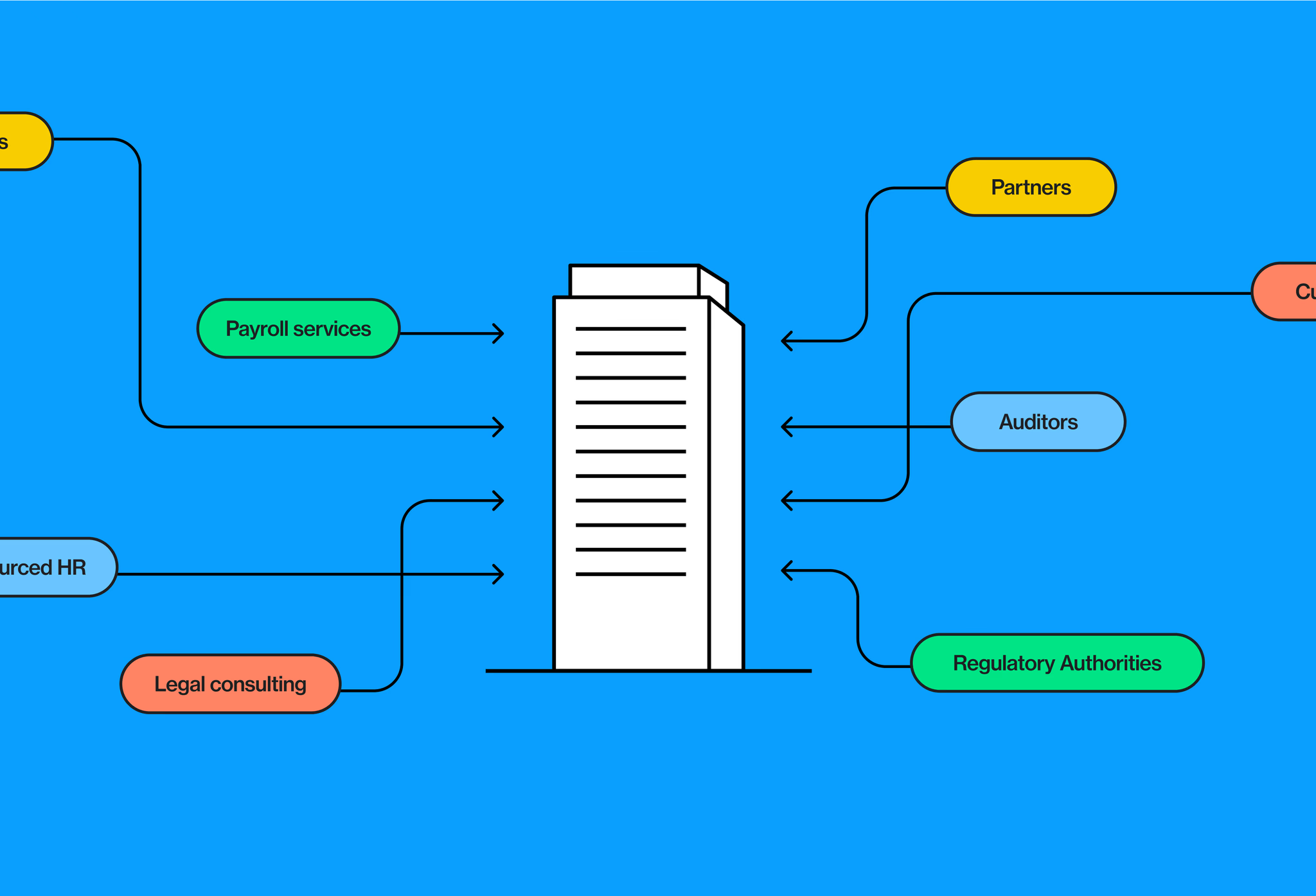
In today’s evolving business landscape, companies are increasingly reliant on a workforce that extends beyond traditional, full-time employees. Temporary workers, contractors, partners, and even vendors now play critical roles within organizations. This trend towards a hybrid workforce brings additional flexibility but also challenges, particularly in managing and governing the access of these non-employees. According to Gartner, 45% of security breaches involve non-employee users, underscoring the need for greater visibility and oversight in managing their access.
To effectively govern non-employee access, organizations need a modern approach that goes beyond traditional access management capabilities and provides the following essential capabilities:
Effectively governing non-employee access requires a modern solution. As the workforce continues to evolve, organizations must prioritize non-employee access governance to maintain security, meet compliance requirements, and reduce operational inefficiencies. By investing in a solution that meets these needs, organizations can not only manage non-employee access effectively but also enable a more agile, secure, and compliant digital environment.
Ready to manage non-employee access?
Contact us today to learn how we can help.

Software as a Service (SaaS) applications have become essential in the modern business landscape, offering incredible flexibility, rapid deployment, and scalability. They allow teams to work more efficiently, improve productivity, and access the best tools the market has to offer. However, with great convenience comes significant security challenges—specifically, the rise of "SaaS sprawl."
SaaS sprawl occurs when departments and employees adopt SaaS applications independently, often without IT oversight or a clear strategy. This unchecked growth creates a tangled web of overlapping tools, unmanaged permissions, and a larger attack surface. When SaaS apps proliferate without a centralized strategy, organizations face mounting security, compliance, and financial risks.
The solution? Effective identity and access management (IAM). By focusing on identity-first strategies, organizations can control SaaS growth, manage permissions, and enhance security—ensuring that SaaS remains an asset rather than a liability. In this article, we’ll explore what drives SaaS sprawl, its potential risks, and how identity management can help tame this growing challenge.
SaaS sprawl refers to the uncontrolled adoption of cloud-based applications within an organization without proper management or oversight. Often, this happens when departments or individual employees independently subscribe to SaaS tools without consulting IT or obtaining centralized approval. This fragmented approach leads to multiple tools performing similar functions, increased spending, and a lack of visibility into who has access to what.
When SaaS sprawl occurs, the identity component becomes fragmented as well. Each SaaS application typically comes with its own set of users, access controls, and permissions. Without central oversight, managing who has access to which apps—and more importantly, managing privileges—becomes a daunting task. This ultimately results in "permission sprawl," where users accumulate more permissions than necessary, creating vulnerabilities that attackers could exploit.
SaaS has transformed the way organizations operate, bringing agility, scalability, and efficiency. However, without proper oversight, the uncontrolled adoption of SaaS apps can introduce significant risks—from privilege sprawl to non-compliance. An identity-first approach is the key to managing SaaS growth effectively, providing the visibility, control, and security needed to harness the benefits of SaaS while minimizing the risks.
By leveraging identity and access management tools, centralizing procurement, simplifying processes, and conducting regular audits, organizations can tame the SaaS beast—ensuring that each tool serves the company’s goals securely and efficiently.
Ready to regain control over your SaaS environment? Linx Security offers comprehensive identity and access management solutions that give you the visibility and control you need to manage your SaaS ecosystem effectively. Contact us today to learn how we can help secure your growing SaaS stack with confidence.
With the imminent arrival of PCI DSS 4.0, organizations handling payment card data are facing a significant shift in compliance requirements. This new version, expanding from 370 to over 500 requirements, reflects a comprehensive update to enhance data security in an evolving threat landscape. As we approach the March 2025 deadline, there's an urgent need to understand and implement these changes, particularly in the realm of access management.
Access management has long been a cornerstone of data security, but PCI DSS 4.0 elevates its importance significantly. The updated standard introduces stricter requirements around:
These changes reflect a deeper understanding that securing access to sensitive data is not just about external threats but also about managing and mitigating internal risks. Unauthorized access—whether due to malicious intent or simple oversight—poses one of the greatest vulnerabilities to an organization's data security.
The emphasis on access management in PCI DSS 4.0 is not merely a regulatory box to tick; it's a critical component of an organization's overall security strategy. Here's why it's essential:
To align with PCI DSS 4.0 and strengthen security, organizations should focus on implementing key access management strategies:
With the transition deadline set for March 2024, and the introduction of new best practices required by March 2025, organizations need to act swiftly. This period presents an opportunity to not only achieve compliance but also to build a more resilient security posture.
The first step in this journey is conducting a thorough gap analysis to understand where current practices may fall short of the new requirements. From there, developing a clear roadmap for implementing enhanced access controls and other measures is crucial. Engaging with partners who deeply understand the technical and regulatory aspects of PCI DSS 4.0 can provide valuable guidance and support throughout this process.
The urgency of PCI DSS 4.0 compliance is clear, but at its core, this is about more than just adhering to a set of rules. It's about recognizing that access management is a foundational element of data security. By focusing on implementing robust access controls, organizations can better protect their data, reduce the risk of breaches, and ultimately build stronger, more secure systems.
For organizations seeking to navigate the complexities of PCI DSS 4.0, solutions that offer automated access management, MFA implementation, and continuous monitoring can make a significant difference. These tools not only help achieve compliance but also enhance the organization's overall security framework, providing peace of mind in an increasingly complex digital landscape.
If youʼre looking for expert guidance to navigate the transition to PCI DSS 4.0 and enhance your access management capabilities, contact us at Linx Security. Our team is ready to help you build a stronger, more secure future.