


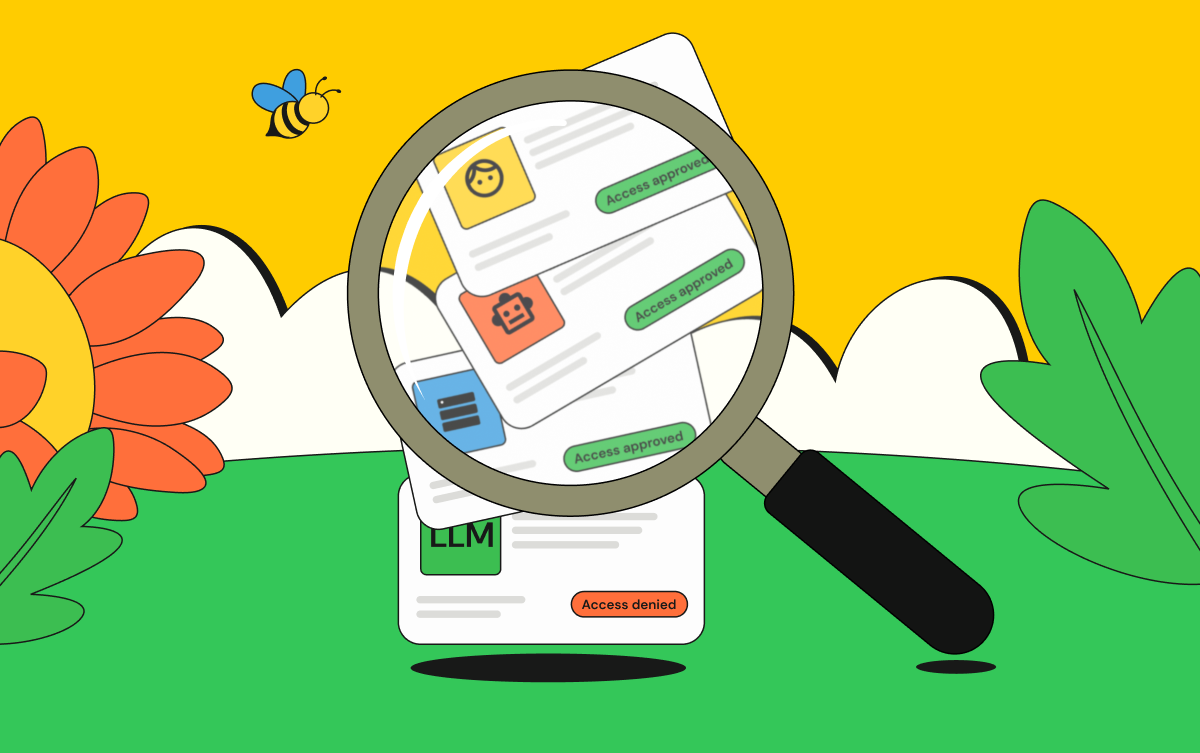
Identity governance now has to cover a far larger and more complex estate than it was originally built for, with machine identities and AI agents outnumbering employees and often operating without clear ownership or lifecycle controls. Modernizing IGA means fixing the identity data foundation first, then building explicit ownership and lifecycle models, operationalizing least privilege as a continuous practice rather than a periodic check, automating well-understood governance decisions in sequence, and bringing NHIs and AI agents into the same governance program as workforce identities, all measured against outcomes like reduced excessive access and faster remediation rather than just completed reviews.
Identity governance and administration (IGA) has not become less important. It has become responsible for considerably more.
The identity estate now spans employees, contractors, service accounts, workloads, API keys, machine identities, and AI agents operating across SaaS, cloud, on-premises, and hybrid environments. Many of those identities do not originate in HR, follow a predictable joiner-mover-leaver lifecycle, or wait for a quarterly certification campaign before their access changes.
The scale alone changes what IGA needs to handle. Palo Alto Networks' 2026 Identity Security Landscape, based on a survey of 2,930 cybersecurity leaders, found that machine identities now outnumber human identities 109:1, while AI agents are expected to grow another 85% this year. The same research found that 96% of respondents report human identities operating with access beyond what their roles require.
IGA has to operate differently in this environment. Modernizing it is not simply a matter of migrating from one platform to another. Organizations need to modernize the identity data underneath governance, the operating model around it, the way least privilege is maintained, the processes they automate, the identities they include, and the metrics they use to determine whether governance is actually working.
The evolution of IGA is also showing up in industry research. In 2026, Linx was recognized in multiple Gartner research publications focused on identity governance and digital identity, including as a Representative Vendor in the Gartner® Market Guide for Identity Governance and Administration, as a Sample Vendor in the Gartner® Hype Cycle™ for Digital Identity, 2026, and in Gartner research on Infusing Agentic AI to Enhance Your IGA. While the research itself is available to Gartner subscribers, Linx's inclusion across these areas reflects the broader evolution taking place across identity governance as organizations adapt to more complex and increasingly AI-driven identity environments.
The goal is not to replace the fundamentals of IGA. It is to make them work at the scale, speed, and complexity of the modern identity estate.
Start with the identity foundation
Before redesigning a certification campaign or automating another lifecycle workflow, organizations need an accurate understanding of the identities and access they are attempting to govern.
Modern identity data rarely lives in one place. HR may provide authoritative information about employees, an IdP may hold authentication data, SaaS applications maintain their own accounts and entitlements, cloud providers use separate permission models, and NHIs may originate from engineering workflows with no connection to a workforce directory at all.
Modern IGA needs to correlate those sources into usable identity context. An account alone is not enough. Governance decisions need to connect identities to accounts, entitlements, resources, owners, lifecycle state, usage, risk, and the relationships between them.
That distinction matters. Knowing that an entitlement exists is visibility. Knowing which identity holds it, why it has it, who owns the resource, whether the entitlement has been used, whether it is consistent with peers, and what other access it creates is the context required to govern it.
Before moving further into an IGA modernization project, teams should be able to answer a few foundational questions:
- Can we produce a complete list of identities with access to our critical systems?
- What percentage of our application estate is actually under governance?
- Can we identify the owner of every privileged service account?
- Which permissions have not been used or reviewed recently?
- Which identities have accumulated access beyond their current role?
These questions are part of the current-state assessment in the Modern IGA Implementation Checklist, which goes deeper into establishing the baseline needed before an IGA modernization project begins, from identity populations and governance coverage to deprovisioning time, stale access, privileged entitlements, and UAR performance.
The important part is sequencing. If the underlying identity data is fragmented or incomplete, everything built on top of it inherits the same problem.
Design governance around ownership and lifecycle
Once the identity foundation is reliable, the next modernization challenge is the operating model.
Security, IAM, IT, HR, application owners, engineering teams, and business leaders all participate in access decisions, but participation is not the same as accountability. Modern IGA needs explicit ownership for applications, access decisions, exceptions, and identities that do not have a traditional manager.
Application administration and access ownership are also not necessarily the same thing. The person who can technically change permissions in an application may not be the person best positioned to determine whether those permissions are appropriate.
Lifecycle governance needs the same clarity.
A workforce identity may have a familiar lifecycle, but even traditional JML processes become difficult when access extends across hundreds of applications and infrastructure platforms. Movers are particularly challenging because new access is often easier to provision than old access is to remove. Over time, permissions from previous roles, projects, and teams accumulate.
NHIs require lifecycle models of their own. A service account may exist for the life of an application. A workload identity may be ephemeral. An API credential may need a defined expiration or rotation policy. An AI agent may be created for a specific business process, gain new integrations as that process expands, and eventually need to be retired.
Modern IGA needs to represent those different lifecycle models without separating them into disconnected governance programs.
One useful principle is to build role models from the access people actually have rather than simply recreating the organizational chart. Organizations also need a shared lifecycle model so access logic extends consistently across directories, cloud, SaaS, service accounts, and other identity populations.
Implementing IGA at Scale: A Practical Guide for Modern Enterprises goes deeper into how to build that operating model, from shared ownership and lifecycle modeling to automation sequencing and the data and policy foundation required to govern at scale.
Operationalize least privilege instead of periodically checking it
Least privilege is easy to support as a principle and considerably harder to maintain as an operating state.
As roles change, projects end, contractors move between engagements, applications are added, and exceptions are granted, the access an identity needs today diverges from the access it needed six months ago. Role-based access control provides a foundation, but a role model alone cannot continuously account for every change in business context.
As the CISO's Guide to Modern Identity Governance puts it, “Granting access is the easy part. The challenge is continuously aligning access decisions with changing business reality.”
That is the shift modern IGA needs to make. Least privilege cannot be something organizations validate only during a periodic review. Governance needs enough context to continuously identify access that is stale, unused, excessive, privileged, inconsistent with an identity's current role, or incompatible with other permissions.
There are practical places to start. Pull every entitlement that has not been used or reviewed in the last 90 days. Look at employees who changed roles in the last six months and determine whether their previous permissions were removed or simply supplemented. Identify temporary access that never expired. Find privileged entitlements without clear owners. Evaluate where standing privilege can be replaced by just-in-time access.
Separation of duties should also move earlier in the process. Rather than discovering a toxic combination during a certification months after the access was granted, policy should be able to identify incompatible entitlements before the combination is created.
Modern UARs follow the same principle. Instead of asking reviewers to treat hundreds or thousands of entitlements equally, reviews should provide evidence around usage, ownership, risk, and peer behavior so attention is concentrated where judgment is actually required. The outcome to measure is not simply whether the review was completed, but whether inappropriate access was identified and removed.
The CISO's Guide to Modern Identity Governance provides a deeper way to evaluate that progression through its four-level Governance Maturity Map, moving from manual, compliance-focused governance to visibility-driven, risk-informed, and ultimately adaptive governance.
Automate the right governance decisions
Continuous governance cannot operate entirely at human speed.
That does not mean every access decision should be handed to automation. It means organizations need to distinguish between governance decisions that are deterministic enough to execute automatically and those where business context or potential impact requires human judgment.
A termination event is a clear example. Once the authoritative source establishes that an employee has left, the organization should not need an analyst to manually discover and remove each connected account. Temporary access with a defined expiration should not require someone to remember to revoke it. A clear policy violation should not remain active simply because remediation is sitting in a ticket queue.
More ambiguous decisions are different. A privileged entitlement with legitimate recent usage may require review. An unusual access pattern may need additional context. A high-impact exception may require approval from the resource owner.
The objective is not maximum automation. It is appropriate automation with a clear path from governance signal to action.
And the order matters.
Automating on top of incomplete identity data, duplicate accounts, unclear ownership, or poorly defined lifecycle logic does not create modern IGA. It makes unreliable governance faster. Organizations should establish reliable data and ownership first, then begin with high-volume, well-understood processes and validate them end to end before expanding.
A simple JML workflow for a well-understood population can establish that model. Once it works, organizations can expand into movers, contractors, remediation, certification decisions, NHIs, and other identity populations.
This is also where modern IGA should close the gap between finding a problem and fixing it. A governance platform that identifies stale access but leaves every remediation step to another system and another person has improved visibility, but the operating model is still constrained by human intervention.
Implementing IGA at Scale provides the deeper implementation framework for sequencing that transition without trying to automate everything at once.
Govern every identity in the same program
Modernizing workforce governance while leaving machine and agentic identities outside the program solves only part of the problem.
Palo Alto Networks' 2026 research found not only that machine identities outnumber humans 109:1, but that 99% of surveyed organizations have adopted AI agents and 40% of those agents already have access to organizational data. Yet only 37% reported the ability to revoke an AI agent's credentials, and only 30% had immutable audit logging for agent activity.
Those identities need more than discovery.
A modern IGA program should continuously inventory NHIs and AI agents, assign accountable owners, document business purpose, understand which systems and data they can reach, establish lifecycle and expiration policies, monitor permission changes, and replace broad standing credentials with scoped or short-lived access where appropriate.
AI agents add another layer. Because agents can interact with tools and applications and execute actions, governance increasingly needs to understand not only what an agent can access but the authority it has been given within those systems.
That includes understanding the relationship between an agent and the identity behind its activity. If a human invokes an agent with broader permissions, can the human indirectly exercise access they do not have themselves? If one agent invokes another agent or tool with greater authority, can governance trace that chain? If an agent's purpose changes, do its permissions change with it?
The Modern IGA Implementation Checklist includes a dedicated set of checkpoints for bringing NHIs and AI agents into the same governance program as workforce identities, including ownership, purpose, access scope, credential strategy, lifecycle policy, permission monitoring, and agent action controls.
The identity types behave differently. That does not mean they should live in separate governance silos.
Measure whether governance actually changed
An IGA modernization program should have a higher bar for success than deploying a new platform, connecting applications, or completing certifications.
It should be able to prove that governance outcomes changed.
That means establishing a baseline before implementation and measuring whether the organization is actually reducing unnecessary access, accelerating lifecycle changes, expanding governance coverage, automating appropriate processes, and shortening the distance between identifying risk and remediating it.
Useful measures include:
- Time to provision and fully deprovision identities
- Percentage of identities and applications under active governance
- Dormant, stale, orphaned, and unowned identities over time
- Reduction in excessive and standing privileged access
- UAR revocation and exception rates
- Percentage of lifecycle and remediation actions completed automatically
- Time from risk identification to remediation
- Ability to produce audit-ready evidence without manual aggregation
A completed governance process is not the same thing as an effective governance control.
If a UAR reaches 100% completion but almost nothing is revoked, the completion rate tells an incomplete story. If a leaver workflow closes a ticket in minutes but access remains active in SaaS or cloud systems for days, ticket resolution is the wrong metric. If a dashboard identifies hundreds of orphaned accounts but remediation remains manual, visibility has improved while the underlying exposure remains.
The Modern IGA Implementation Checklist goes deeper into how to measure these outcomes and prove whether the governance program is actually reducing access risk rather than simply generating more governance activity.
A modern IGA program starts here
IGA modernization is not one project. You may be assessing the maturity of your current program, redesigning your operating model, evaluating technology, or already working through implementation. The important thing is knowing where your current program falls short, what the target state should look like, and which changes need to happen first.
Wherever you're starting, these resources can help you take the next step:
- CISO's Guide to Modern Identity Governance: Assess your IGA maturity and define what needs to change.
- Implementing IGA at Scale: A Practical Guide for Modern Enterprises: Build the operating model to put modern IGA into practice.
- Modern IGA Implementation Checklist: Turn your modernization strategy into an actionable implementation plan.
You do not need to modernize every part of IGA at once. But modernization should move toward a clear end state: one governance model capable of understanding every identity, continuously evaluating whether access remains appropriate, and acting when it does not.
Linx was built around that model, bringing human, non-human, and AI identities into a unified identity graph with the context, lifecycle governance, automation, and remediation needed to operationalize modern IGA.
Ready to modernize your IGA program? Start with the resources above, then book a demo with Linx to see how modern IGA works in practice.
Frequently asked questions about modern IGA
What is modern IGA?
Modern IGA extends traditional identity governance beyond periodic, workforce-centric processes to provide continuous governance across human, non-human, and AI identities. It connects identity, account, entitlement, ownership, lifecycle, usage, and risk context across SaaS, cloud, on-premises, and hybrid environments so organizations can make and enforce better access decisions.
How is modern IGA different from traditional IGA?
Modern IGA retains core capabilities such as JML, UARs, access requests, SoD, lifecycle management, and audit evidence. The difference is how those capabilities operate. Modern IGA uses continuously updated identity context, risk-informed decisions, event-driven lifecycle governance, automation and remediation, and governance across NHIs and AI agents rather than relying primarily on periodic workforce processes.
How do you modernize an IGA program?
IGA modernization should begin with an accurate inventory of identities, accounts, entitlements, resources, and ownership. Organizations can then establish lifecycle and ownership models, operationalize least privilege, automate well-understood governance decisions, modernize UARs, bring NHIs and AI agents into the same governance program, and measure whether those changes are reducing identity risk.
How should modern IGA govern non-human identities?
NHIs should be continuously discovered and connected to an accountable owner and defined business purpose. Their permissions, credentials, lifecycle, usage, and access to resources should be governed alongside workforce identities, with scoped or short-lived access used in place of broad standing credentials where appropriate.
How does IGA apply to AI agents?
AI agents require the identity governance fundamentals applied to other identities, including discovery, ownership, lifecycle management, least privilege, and access reviews. Because agents can also take actions across enterprise systems, organizations increasingly need governance that understands the agent's permissions, the identity behind its activity, the actions it is authorized to execute, and the context in which that authority is used.
What should organizations look for in a modern IGA platform?
A modern IGA platform should unify governance across human, non-human, and AI identities; correlate identities with accounts, entitlements, resources, ownership, and lifecycle context; support automated JML and remediation; operationalize least privilege and SoD; provide risk-informed UARs; govern NHIs and AI agents; and provide evidence that governance controls are producing measurable outcomes.
How should IGA modernization be measured?
IGA modernization should be measured by governance outcomes rather than implementation activity alone. Useful metrics include provisioning and deprovisioning time, governance coverage, reductions in dormant and orphaned identities, excessive privilege reduction, UAR revocation rates, automation rates, and time from risk identification to remediation.
What's next?